Civiltà minoica
Indice dei contenuti
La presenza neolitica sull'isola di Creta lascia il posto alle meraviglie della civiltà minoica. Il nome è stato attribuito a quest'epoca dagli studiosi moderni, come riferimento al mitico re Minosse, sovrano del regno e del palazzo di Cnosso.
La cultura minoica si sviluppò, fiorì e decadde tra il 3500-3000 a.C. e il 1000 a.C. e durò quasi due millenni.
Gli archeologi hanno identificato cinque periodi distinti:
- Prepalaziale (3500/3000-2000 a.C.)
- i primi palazzi (2000-1750 a.C.)
- i Secondi Palazzi (1750-1500 a.C.)
- il Palazzo Finale (1500-1350 a.C.)
- il Postpalaziale (1350-1100/1000 a.C.)
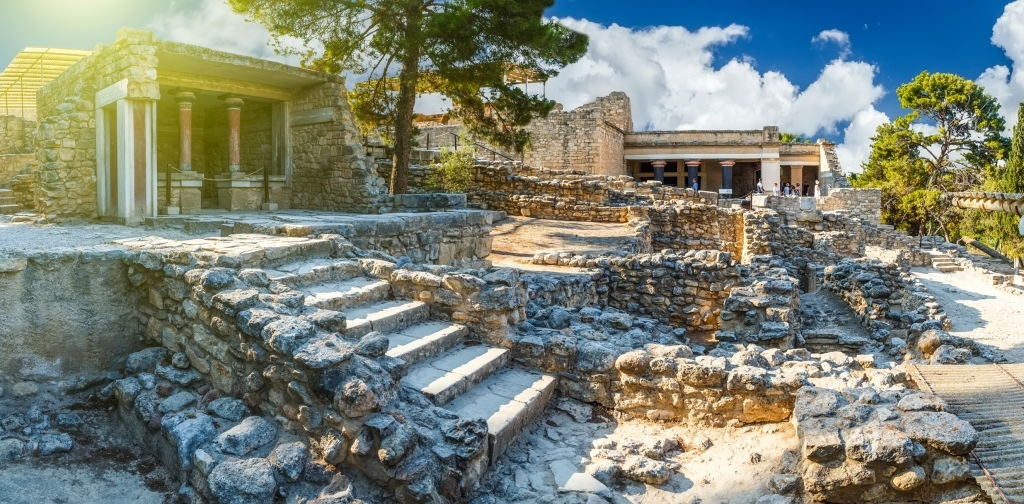
In sostanza, si tratta di tre periodi palazziali, intervallati da periodi senza alcuna organizzazione palazziale. Gli scavi dell'archeologo britannico, Sir Arthur Evans and his team, which included members of several nations – alongside the Greeks and Cretans – brought to light a civilization whose existence until then was only known through Homeric epics and Greek myths (specifically the Minotaur). The discovery of Evans, at the start of the 20th century, revealed the ruins of the great Palazzo di Cnosso – the foremost city in Crete from Neolithic times through the Bronze Age.
Da quello che sappiamo, il Palazzo di Cnosso, and indeed Minoan towns in general, enjoyed a standard of water management and sanitation which most other cities in Europe during the Hellenistic and Roman times, would surely envy. Their walls were decorated with elaborate and colourful frescoes, where the Minoans come across as people with a passion for life, mainly peaceful and connected to the natural world around them. It is also evident that they were inclined to dancing and sought enjoyment in large public spectacles and athletic contests – when it came to the latter they were, however, often violent! The complex structure of the Palace of Knossos is perhaps responsible for the birth of stories about the infamous Labirinto. The palace certainly is a maze of corridors, stairs and rooms – at times four or five stories high! When it came to their diet, it was supported and largely dependent on the so-called Mediterranean triad of crops – cereals, vines and olives. Then as today, oil and vine products were the main agricultural products grown in and exported from Crete.
Il mare
Il Minoici comprendevano perfettamente l'importanza del mare per la loro vita e le loro relazioni commerciali. Durante l'ascesa della Civiltà minoicanon hanno mai portato alla costruzione di mura intorno alle loro città (Malia è un'eccezione). Al contrario, utilizzavano altre difese e sistemi di allarme basati su fari, oltre a efficienti vie di comunicazione e fortini presidiati che servivano al loro posto. Il mare era anche una via di comunicazione con altre culture. Gradualmente i Minoici divennero abili maestri d'ascia e furono la prima cultura del Mediterraneo a basare la propria espansione su una flotta commerciale. Poco dopo, stabilirono colonie nelle vicine isole dell'Egeo, come le Cicladi, e intrapresero scambi commerciali con le isole del Mediterraneo. Egitto e Siria (il Levante). Si ritiene che alla fine abbiano raggiunto la Sicilia e forse la Sardegna. Le ricchezze acquisite all'estero durante i loro rapporti commerciali permisero loro di creare grandi porti, organizzare un efficiente sistema di gestione delle acque e, naturalmente, costruire imponenti palazzi.
Persino gli egizi, che erano orientati verso se stessi, ammiravano l'attività marinara dei minoici. Su diverse tombe egizie, troviamo scene di Egei (il Keftiu are likely to be Cretans) bearing ‘gifts’ to the Pharaoh. For the most part, the Minoans are portrayed as ‘good’ foreigners from the “Great Green”, whereas many others from beyond Egyptian shores are collectively termed “Haunebu“, or barbarians.
Carattere
I minoici svilupparono un'efficace burocrazia centralizzata per monitorare e gestire gli scambi commerciali e la vita quotidiana. I loro registri giornalieri erano riportati su tavolette di argilla. Le prime scritture sono geroglifiche e devono certamente molto all'Egitto. Più tardi, sotto lo stimolo dello stile di vita dei palazzi, emerge una scrittura sillabica: prima la Lineare A (minoica e ancora indecifrata) e poi la Lineare B (una vecchia forma di greco, leggibile e introdotta dalla terraferma). I Minoici non decoravano le loro pareti con scene di battaglia e di successi bellici, né sono state scoperte testimonianze scritte che descrivano eventi e imprese militari.
The two favourite themes for the frescoes are scenes of Minoans in everyday life, albeit with a ritual dimension which also includes athletic events and scenes of the natural world. The latter is characterized by flowers, fish, dolphins, birds and various animals set in mythical landscapes. The human figures on the frescoes are above all glamorous, with long black hair and lissome silhouettes, clad in beautifully patterned and multi-coloured costumes. The women, in particular, are drawn wearing eye-catching dresses and bodices that often leave the bosom bare – perhaps to denote beauty, health and fertility. If one can place any credence in the scenes portrayed by the Minoans, the display of female breasts was not considered provocative and would have been standard practice during certain rituals or even in everyday life when women nursed their babies.
Società
Le donne di Creta godevano di una libertà sociale superiore a quella di qualsiasi altra cultura contemporanea, persino più di quelle di Egitto. Gli affreschi della Palazzi e case ritraggono le donne come personalità indipendenti, vestite elegantemente e truccate. Inoltre, partecipavano alle cerimonie pubbliche insieme agli uomini, anche durante gli eventi sportivi. In effetti, in molti di questi rituali, sono le dame di corte ad avere il ruolo centrale, mentre gli uomini sono spesso esclusi.
Al suo apice (1700-1200 a.C.), la popolazione minoica dell'isola potrebbe aver raggiunto le 250.000 persone; si stima che la città di Cnosso avesse tra i 15.000 e i 40.000 abitanti.
The highest members of Minoan society were the aristocracy and noble-born, including the clergy. Below them were the craftsmen, traders and administrators – the most important of whom survived on rations issued by the palace. Further down the scale were the working folk of the day – farmers, shepherds, fisherman and unskilled labourers. It is unclear whether those less-privileged were better off than their equivalents in other cultures of the time. A thousand years later, Aristotle commented that labourers in the times of the Minoans enjoyed all the privileges their society had to offer – except for two: they could not carry weapons, nor could they participate in sports and gymnastic activities.
La religione
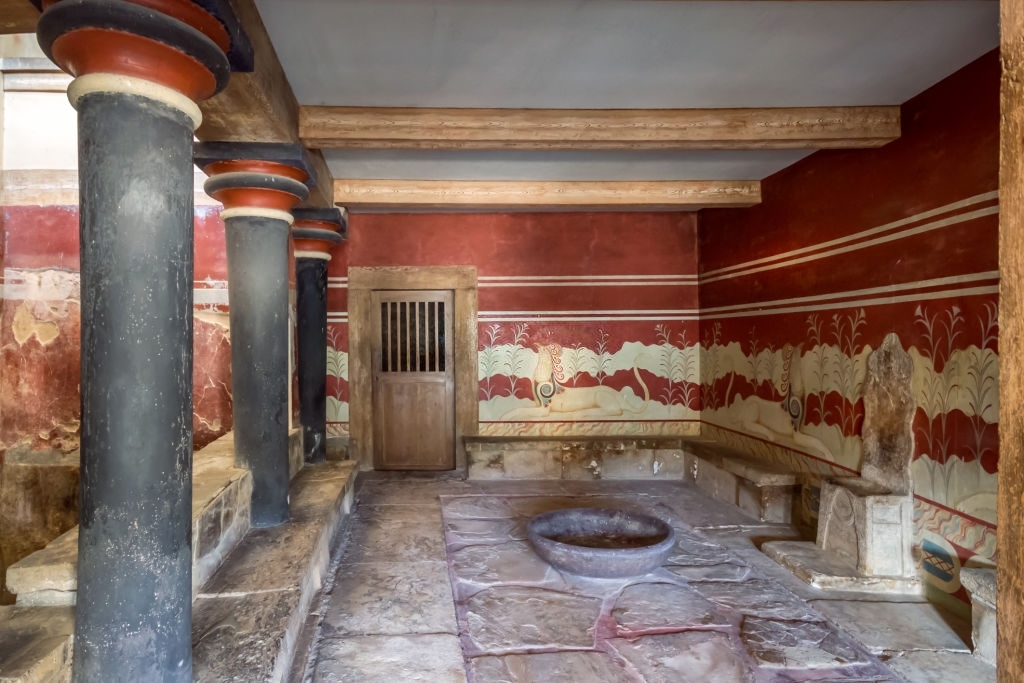
Durante questo periodo, gli aspetti politici, laici e religiosi della società erano pienamente integrati. Il Sala del trono di CnossoIl tempio, realizzato in alabastro e non particolarmente lussuoso, era un'area importante, dove oltre alle questioni amministrative e politiche, i sacerdoti svolgevano spesso importanti cerimonie. Anche gli eventi sportivi erano probabilmente in parte legati al culto del mondo naturale.
Religione minoica
L'animale sacro della Creta minoica era il toro e opere d'arte raffiguranti la bestia si trovano su ogni lato della città. Palazzo di Cnosso. The most popular and important ‘sport’ at the time, was bull-leaping where athletes took the bull by the horns and performed complex somersaults over his back. It is believed that the purpose was connected to the worship of the bull and part of a specific ritual, and the male and female athletes that performed the jump were not in serious danger.
In generale, si sa poco della religione dei minoici e non sono stati ritrovati templi elaborati e separati, senza includere il tempio principale. Palazzo that was surely considered a sacred structure. There is also very little information regarding the powerful priesthoods or large cult statues of the Gods, though these may have not survived if they were made of wood. The main deity was some sort of Great Mother, which may perhaps explain the central role of women in Minoan society. Many small figurines depict the goddess with an elaborate dress, bare breasts and intricate and impressive hairstyles. Some are shown handling snakes. The ceremonies, sporting events and the sacrifice of bulls were carried out to ensure that the Mother Goddess would protect them from disasters – such as shipwrecks, sicknesses, failure of crops and of course, earthquakes.
La fine della civiltà minoica
Nonostante i loro frequenti sacrifici per Dea Madre, il Minoici erano molto spesso e gravemente afflitti da terremoti. Le scosse e le scosse di assestamento avrebbero esercitato un'immensa pressione sulla loro società e sarebbero state certamente dannose dal punto di vista finanziario, anche all'apice della loro potenza. Uno degli eventi più distruttivi fu la grande eruzione vulcanica di Thera (moderno Santorini) nel II millennio a.C. L'esplosione devastò il cuore della Isola cicladica, ha portato al crollo della sua parte centrale e ha ricoperto una vasta area in metri di pomice e cenere.
La nube di cenere che si spostò verso sud causò problemi anche sull'isola di Creta, ricoprendo campi e case prima che una serie di potenti tsunami si abbattesse sulla costa settentrionale, seminando morte e distruzione in tutta l'area. La flotta minoica fu completamente distrutta dagli tsunami.
Tuttavia, la civiltà minoica non scomparve subito. Negli anni successivi, l'isola fu devastata da calamità naturali e disordini civili che la resero vulnerabile ai conquistatori. Alla fine, furono invasi e sconfitti dai bellicosi Miceneiche stabilirono un forte controllo politico e adottarono molte delle pratiche dei Minoici. Gli ultimi palazzi, Cnosso, Kydonia (Chania) e Agia Triada da Festini, flourished for a century or so, before succumbing to natural disasters and extensive fires. Even so, Crete – now more regionalized – was able to maintain a strong presence within the Mycenaean world until 1200-1100 BC.
 IT
IT  EN
EN  DE
DE  FR
FR  NL
NL  PL
PL