Miti di Creta
Indice dei contenuti
Molti dei miti greci più conosciuti sono ambientati nell'isola di Creta. At its peak, the Minoan civilization (2000 – 1450 BC), and together, the isola di Cretaera la forza dominante nel Mediterraneo orientale. Mantenne il controllo dei mari della regione, riuscendo così a diffondere e a esercitare la propria influenza su diverse regioni del Mediterraneo. Si ritiene che alcuni di questi miti e identità della prima religione minoica siano confluiti successivamente nel pantheon greco: il Dei dell'Olimpo. La storia più antica riguarda la nascita di Zeus, Padre degli dei e uomini.
La nascita di Zeus
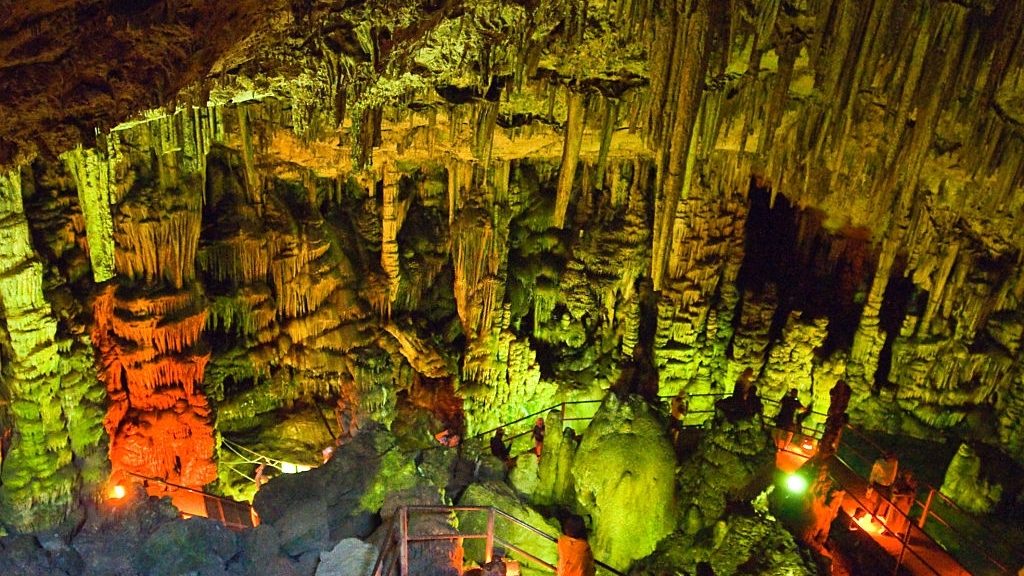
La nascita di Zeus è uno dei miti più noti ambientato sull'isola di Creta. Secondo la storia, Kronos (son of Ouranos – Sky – and Gaia – Earth) married his sister Rhea and brought many children into the world. But Kronos, scared by a prophecy that he would lose his throne to one of his children, swallowed all the newborns – in an attempt to avoid Fate. Rhea, at this point pregnant with Zeus, could not stand to watch more of her children being consumed and managed to escape to the island of Crete where she could give birth in secret. This is how Zeus was born in a cave in the montagne di Creta. A tutt'oggi l'esatta ubicazione è contestata: alcuni indicano la località di Psico sul Monte Dicti, mentre altri a Grotta dell'Idaion sul Monte Ida.
Il compito di proteggere e nutrire il neonato spettava al Idaian Dactuloi, il Coriti e la ninfa capra Amalthea, oltre ad altre tre ninfe e varie altre creature. La storia racconta che il Kouretes si esibirono in una danza di guerra, facendo sbattere le spade sugli scudi e calpestando il terreno più forte che potevano, per coprire il pianto del bambino. Zeus. It is not certain whether Amalthea was a goat or nymph, but she provided the necessary nourishment for the baby boy to grow. They also positioned his cradle so that it hung from a tree, so that it didn’t touch the earth, sky or sea and could avoid the watchful eye of Kronos who ruled all three. Meanwhile, Rhea returned to Kronos e gli presentò una pietra in fasce, che Crono inghiottì credendo che fosse il bambino. Zeus. In seguito, Zeus si vendicò del padre e riuscì a liberare i suoi fratelli, Estia, Demetra, Hera, Ade, e Poseidone.
Zeus, Europa e la nascita di Minosse
Questo mito di Zeus e Europa carries historical significance – reflecting Crete’s connections with the East. In a way, it seeks to explain how Crete, with its prehistoric ties to Asia Minor, Syria, the Levant (Phoenicia) and Egypt also acquired a European dimension. According to the myth, Zeus fell in love with Europa, the daughter of the Re di Fenicia. Folgorato dal suo desiderio, Zeus cercò di sedurre la ragazza per poterla reclamare per sé. Per realizzare il suo piano, si trasformò in un bel toro bianco e si posizionò vicino al luogo in cui si trovava la ragazza. Europa stava giocando, vicino alla spiaggia. Fidandosi del toro, Europa si avvicinò subito e si sedette sulla sua schiena, Zeus si tuffò subito tra le onde e nuotò fino a Creta. Europa divenne la prima regina di Creta e la loro unione fu consumata all'ombra di un platano a Gortyn. Europa e Zeus ebbero tre figli, Minoas (Minosse), Rhadymanthys e Sarpedon. In seguito, Europa ha sposato Asterios e hanno cresciuto tutti i loro figli insieme.
Minosse, la regalità di Creta e la nascita del Minotauro
Minosse potrebbe anche essere considerato come il titolo onorifico dato al re di Cnossoe, alla fine, tutti i Creta – similar to how Pharaoh is used in Egypt. The name Minos symbolized strong leadership and divinely-inspired law and order. After the death of Asterios, Minos, the son of Zeus and Europa, wished to succeed him on the throne. Meeting objections from the Cretans, he asked the god Poseidon, his uncle, for a sign of divine intervention, so that everyone could see that he had the support of the Gods. Poseidone sent a beautiful white bull from the sea – expecting Minos to sacrifice the creature after ascending to the throne as a way of acknowledging the help. However, Minos was bewitched by the beauty of the beast and did not want to lose it, thus he kept it at Knossos. Poseidon, now angered, sought revenge; he made Minos’ wife, Pasifae, fall madly in love with the bull. At the queen’s command, Daedalus, the master craftsman of the palace, made a hollow wooden replica of a cow – and told the queen to place herself inside. The bull was deceived and mated with the wooden cow. Nine months later Pasifae diede vita a un mostro, un umano con la testa di toro. Il famoso Minotauro che viveva in un labirinto costruito da Dedalo.
Il Minotauro
Questo mito ruota attorno a un pedaggio imposto come punizione da Re Minosse su Atene by which 14 young men and women became prey to the Minotaur. Some accounts say this happened every year, while according to others the practice reflected certain lunar phases and took place every 7 or 9 years. The myth reflects on both the Minoan ‘sport’ of bull-leaping and the influence Knossos wielded in southern Greece. This is also arguably the most famous of all the myths associated with ancient Crete. The story begins when a son of Minosse, Androgeo, went to Athens to compete in a tournament. A fine athlete, he won first place in all the events – inciting the jealousy of Re Egeo di Atene. Accecato dalla rabbia, ordinò ai suoi uomini di tendere un'imboscata. Androgeo sulla strada per Megara – where he was slain.
Once Minos heard of his son’s death, he attacked Athens and imposed his harsh terms of surrender that required 7 young men and 7 young women to be chosen by the Athenians and sent to Crete as a sacrifice to keep the rest of Athens safe. The young men and women were thrown into the Labyrinth – a huge structure with spiraling and interconnecting paths built by Daedalus, under the Palace itself. This vast and intricate labyrinth was built in such a way, that once inside no-one could escape. Worst of all, at the center lurked the Minotaur – hungry for flesh!
Teseo e la morte del Minotauro
Atene pagò doverosamente il suo tributo per molti anni, fino al giorno in cui Teseo, figlio di Egeosi offrì volontario per prendere il posto di uno dei sette giovani. Teseo volle liberare gli Ateniesi da questa umiliante punizione e uccidere il Minotauro. Non appena Teseo sceso a terra, incontrò Arianna, la figlia di Minosse, che si innamorò di lui. Incuriosita e desiderosa di aiutare, Arianna si rivolse a Dedalo for help – who once again found a solution and devised a plan to enable the Athenians to escape. The plan was very simple; on entering the Labirinto, Teseo portava con sé una matassa di filo, la legava alla porta e la srotolava al suo passaggio lungo i corridoi tortuosi, in modo da segnare il suo percorso. Teseo ha eseguito le istruzioni; ha navigato nel labirinto, è riuscito a uccidere il Minotauro ed è fuggito riavvolgendo il filo e tornando all'uscita.
Dedalo e Icaro
If the Labyrinth symbolizes the Palace of Knossos and all its architectural complexity, then its creator – Daedalus, the wise engineer and craftsman – characterizes the amazing technical feats the Minoans achieved. Of course, it wasn’t long until Minos discovered the role that Daedalus had played in the escape of Theseus and gave orders for him and his son Icarus to be thrown into the Labyrinth. Father and son were imprisoned and condemned to a slow death. This is when the two devised a plan to escape using a pair of wings fashioned from bird-feathers, that they fastened to their shoulders using wax. Their plan was a success but Icarus disregarded his father’s instructions and flew too close to the sun. The wax melted, the wings dropped off and Icarus plunged to his death, in the cold waters of the Aegean Sea, near present-day Ikaria. According to another story, Icarus dropped from the sky near Sicily, where his father, overwhelmed by grief, lived out his days. The expression “don’t fly too close to the sun” is a reference to the story of Daedalus and Icarus and a warning against being overly overconfident.
 IT
IT  EN
EN  DE
DE  FR
FR  NL
NL  PL
PL