Mythes de la Crète
Table des matières
La plupart des mythes grecs les plus connus se déroulent sur l'île d'Athènes. Crète. At its peak, the Minoan civilization (2000 – 1450 BC), and together, the île de CrèteL'Empire romain était la force dominante de la Méditerranée orientale. Elle gardait le contrôle des mers de la région, et parvenait ainsi à diffuser et à exercer une influence sur diverses régions autour de la Méditerranée. On pense que certains de ces mythes et identités de la religion minoenne primitive se sont retrouvés plus tard dans le panthéon grec : les Dieux de l'Olympe. L'histoire la plus ancienne concerne la naissance de Zeus, Père des dieux et les hommes.
La naissance de Zeus
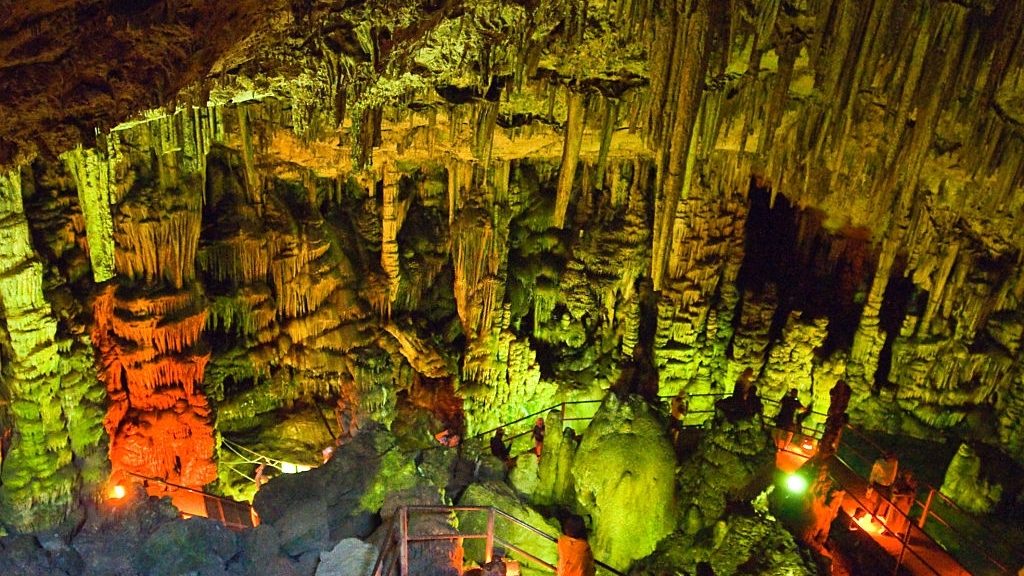
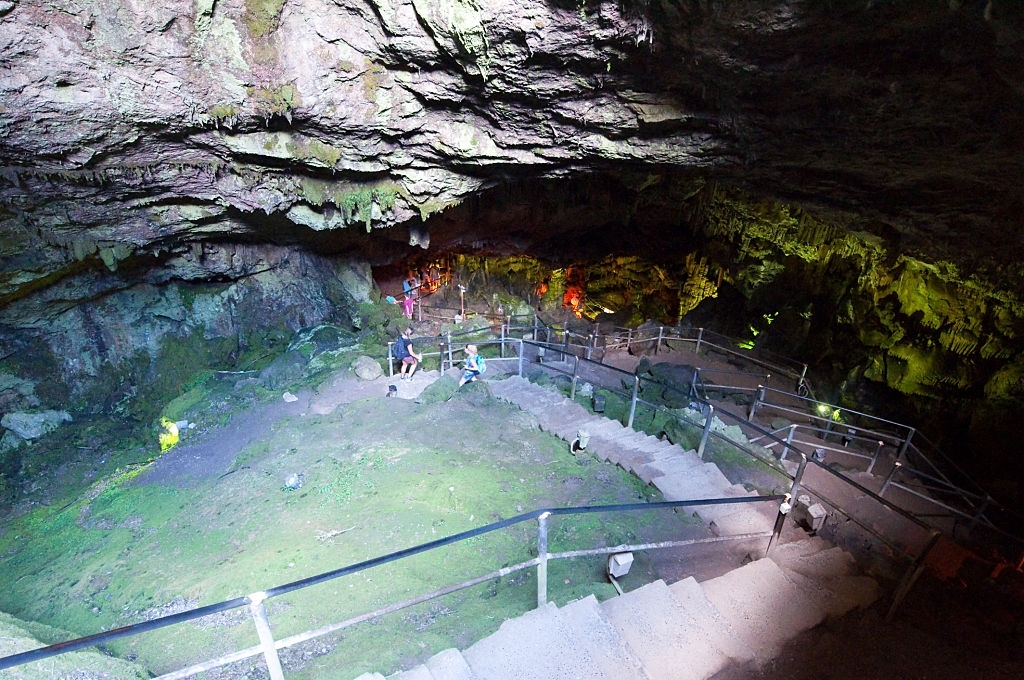
La naissance de Zeus est l'un des mythes les plus connus qui se déroule sur l'île de Crète. Selon l'histoire, Kronos (son of Ouranos – Sky – and Gaia – Earth) married his sister Rhea and brought many children into the world. But Kronos, scared by a prophecy that he would lose his throne to one of his children, swallowed all the newborns – in an attempt to avoid Fate. Rhea, at this point pregnant with Zeus, could not stand to watch more of her children being consumed and managed to escape to the island of Crete where she could give birth in secret. This is how Zeus was born in a cave in the montagnes de Crète. Jusqu'à aujourd'hui, l'emplacement exact est contesté, certains pointant du doigt l'endroit suivant Psychro sur le Mont Dictiet d'autres à Grotte Idaion sur le Mont Ida.
La tâche de protéger et d'élever le nourrisson incombait à la famille. Idaian Dactuloi, le Kourites et la nymphe chèvre Amalthea ainsi que trois autres nymphes et diverses autres créatures. L'histoire raconte que le Kouretes ont exécuté leur danse guerrière, faisant s'entrechoquer leurs épées sur les boucliers, et piétinant le sol aussi fort qu'ils le pouvaient, pour couvrir les pleurs de l'enfant. Zeus. It is not certain whether Amalthea was a goat or nymph, but she provided the necessary nourishment for the baby boy to grow. They also positioned his cradle so that it hung from a tree, so that it didn’t touch the earth, sky or sea and could avoid the watchful eye of Kronos who ruled all three. Meanwhile, Rhea returned to Kronos et lui présenta une pierre dans des langes, que Kronos avala en croyant qu'il s'agissait de l'enfant. Zeus. Plus tard, Zeus s'est vengé de son père et a réussi à libérer ses frères et sœurs, Hestia, Demeter, Hera, Hadès, et Poséidon.
Zeus, Europe et la naissance de Minos
Ce mythe de Zeus et Europa carries historical significance – reflecting Crete’s connections with the East. In a way, it seeks to explain how Crete, with its prehistoric ties to Asia Minor, Syria, the Levant (Phoenicia) and Egypt also acquired a European dimension. According to the myth, Zeus fell in love with Europa, the daughter of the Roi de Phénicie. Fou de désir, Zeus chercha à séduire la jeune fille, afin de la faire sienne. Pour accomplir son plan, il s'est transformé en un beau taureau blanc et s'est placé à côté de l'endroit où la jeune fille se trouvait. Europa jouait, près de la plage. Faisant confiance au taureau, Europa est vite venue s'asseoir sur son dos, Zeus coula aussitôt dans les flots et nagea jusqu'en Crète. Europe devint la première reine de Crète et leur union fut consommée à l'ombre d'un platane, à l'endroit suivant Gortyn. Europe et Zeus ont eu trois fils, Minoas (Minos), Rhadymanthys et Sarpedon. Plus tard, Europa épousa Asterios et ont élevé tous leurs enfants ensemble.
Minos, la royauté de Crète et la naissance du Minotaure
Minos pourrait tout aussi bien être considéré comme le titre honorifique donné au roi de l'île d'Orléans. Knossoset finalement, tous les Crète – similar to how Pharaoh is used in Egypt. The name Minos symbolized strong leadership and divinely-inspired law and order. After the death of Asterios, Minos, the son of Zeus and Europa, wished to succeed him on the throne. Meeting objections from the Cretans, he asked the god Poseidon, his uncle, for a sign of divine intervention, so that everyone could see that he had the support of the Gods. Poséidon sent a beautiful white bull from the sea – expecting Minos to sacrifice the creature after ascending to the throne as a way of acknowledging the help. However, Minos was bewitched by the beauty of the beast and did not want to lose it, thus he kept it at Knossos. Poseidon, now angered, sought revenge; he made Minos’ wife, Pasiphae, fall madly in love with the bull. At the queen’s command, Daedalus, the master craftsman of the palace, made a hollow wooden replica of a cow – and told the queen to place herself inside. The bull was deceived and mated with the wooden cow. Nine months later Pasiphae a donné naissance à un monstre, un humain avec une tête de taureau. Le célèbre Minotaure qui vivait dans un labyrinthe construit par Dédale.
Le Minotaure
Ce mythe tourne autour d'un péage imposé comme une punition par Le roi Minos sur Athènes by which 14 young men and women became prey to the Minotaur. Some accounts say this happened every year, while according to others the practice reflected certain lunar phases and took place every 7 or 9 years. The myth reflects on both the Minoan ‘sport’ of bull-leaping and the influence Knossos wielded in southern Greece. This is also arguably the most famous of all the myths associated with ancient Crete. The story begins when a son of Minos, Androgeos, went to Athens to compete in a tournament. A fine athlete, he won first place in all the events – inciting the jealousy of Le roi Égée d'Athènes. Aveuglé par sa rage, il ordonna à ses hommes de tendre une embuscade Androgeos sur la route de Megara – where he was slain.
Once Minos heard of his son’s death, he attacked Athens and imposed his harsh terms of surrender that required 7 young men and 7 young women to be chosen by the Athenians and sent to Crete as a sacrifice to keep the rest of Athens safe. The young men and women were thrown into the Labyrinth – a huge structure with spiraling and interconnecting paths built by Daedalus, under the Palace itself. This vast and intricate labyrinth was built in such a way, that once inside no-one could escape. Worst of all, at the center lurked the Minotaur – hungry for flesh!
Thésée et la mort du Minotaure
Athènes a consciencieusement payé son tribut pendant de nombreuses années, jusqu'au jour où... Théséefils de Égées'est porté volontaire pour prendre la place d'un des sept jeunes. Thésée voulait libérer les Athéniens de ce châtiment humiliant et tuer le jeune homme. Minotaure. Dès que Thésée En descendant à terre, il rencontra Ariane, la fille de Minos, qui tomba amoureuse de lui. Enchantée et désireuse d'aider, Ariane se tourne vers Daedalus for help – who once again found a solution and devised a plan to enable the Athenians to escape. The plan was very simple; on entering the Labyrinthe, Thésée emportait avec lui un écheveau de fil, l'attachait à la porte et le dévidait au fur et à mesure qu'il passait dans les couloirs tortueux afin de marquer son chemin. Thésée a suivi les instructions ; il a traversé le labyrinthe, a réussi à tuer le Minotaure et s'est échappé en rembobinant le fil et en retournant à la sortie.
Dédale et Icare
If the Labyrinth symbolizes the Palace of Knossos and all its architectural complexity, then its creator – Daedalus, the wise engineer and craftsman – characterizes the amazing technical feats the Minoans achieved. Of course, it wasn’t long until Minos discovered the role that Daedalus had played in the escape of Theseus and gave orders for him and his son Icarus to be thrown into the Labyrinth. Father and son were imprisoned and condemned to a slow death. This is when the two devised a plan to escape using a pair of wings fashioned from bird-feathers, that they fastened to their shoulders using wax. Their plan was a success but Icarus disregarded his father’s instructions and flew too close to the sun. The wax melted, the wings dropped off and Icarus plunged to his death, in the cold waters of the Aegean Sea, near present-day Ikaria. According to another story, Icarus dropped from the sky near Sicily, where his father, overwhelmed by grief, lived out his days. The expression “don’t fly too close to the sun” is a reference to the story of Daedalus and Icarus and a warning against being overly overconfident.
 FR
FR  EN
EN  DE
DE  IT
IT  NL
NL  PL
PL