Mythen van Kreta
Inhoudsopgave
Veel van de bekendste Griekse mythen spelen zich af op het eiland Kreta. At its peak, the Minoan civilization (2000 – 1450 BC), and together, the eiland Kretawas de dominante kracht in het oostelijke Middellandse Zeegebied. Het behield de controle over de zeeën in de regio en slaagde er zo in zich te verspreiden en invloed uit te oefenen op verschillende regio's rond de Middellandse Zee. Aangenomen wordt dat sommige van deze mythen en identiteiten uit de vroege Minoïsche godsdienst later hun weg vonden naar het Griekse pantheon: de Goden van Olympus. Het oudste verhaal gaat over de geboorte van Zeus, Vader der Goden en mannen.
De geboorte van Zeus
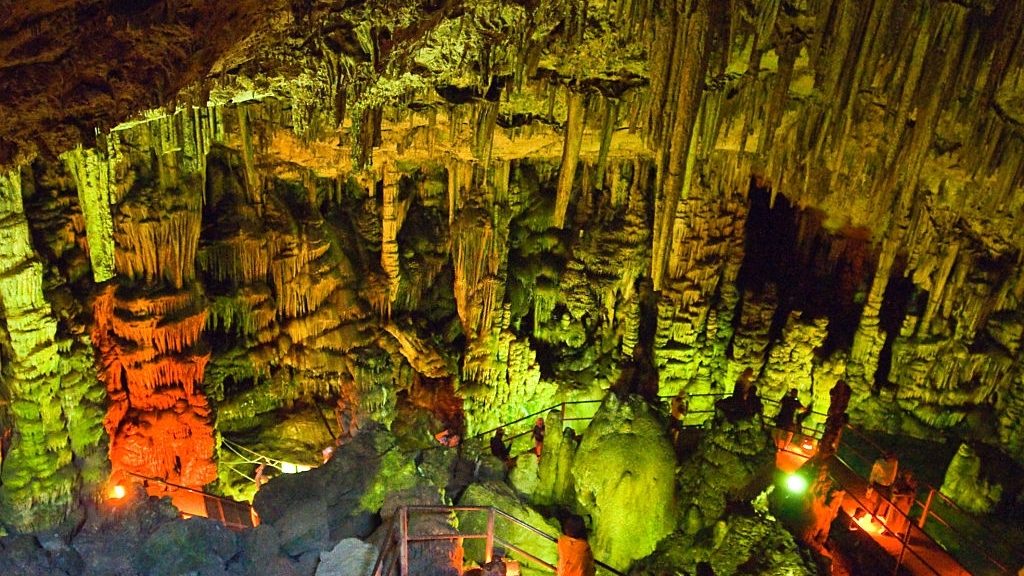
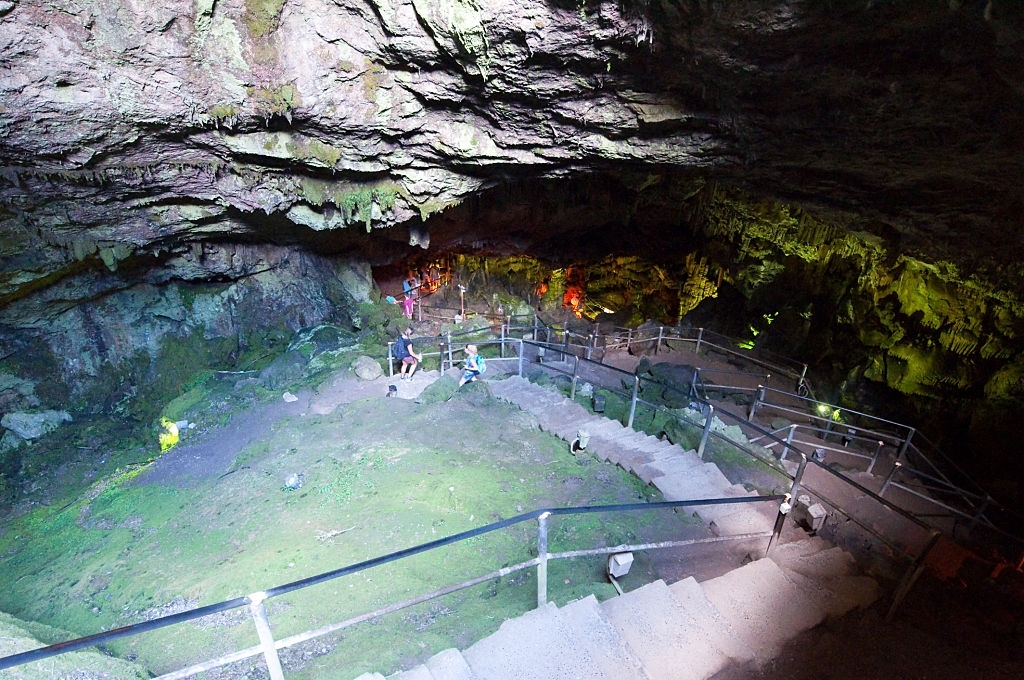
De geboorte van Zeus is een van de bekendste mythen die zich afspeelt op het eiland Kreta. Volgens het verhaal, Kronos (son of Ouranos – Sky – and Gaia – Earth) married his sister Rhea and brought many children into the world. But Kronos, scared by a prophecy that he would lose his throne to one of his children, swallowed all the newborns – in an attempt to avoid Fate. Rhea, at this point pregnant with Zeus, could not stand to watch more of her children being consumed and managed to escape to the island of Crete where she could give birth in secret. This is how Zeus was born in a cave in the de bergen van Kreta. Tot op heden wordt de exacte locatie betwist en sommigen wijzen naar Psychro op de berg Dictiterwijl anderen aan Idaion Grot op de berg Ida.
De taak om het kind te beschermen en te verzorgen lag bij de Idaian Dactuloide Kourites en de geiten-nimf Amalthea en drie andere nimfen en diverse andere wezens. Het verhaal gaat dat de Kouretes voerden hun oorlogsdans uit, sloegen hun zwaarden op hun schilden en stampten zo hard als ze konden op de grond om het gehuil van het kind te bedekken. Zeus. It is not certain whether Amalthea was a goat or nymph, but she provided the necessary nourishment for the baby boy to grow. They also positioned his cradle so that it hung from a tree, so that it didn’t touch the earth, sky or sea and could avoid the watchful eye of Kronos who ruled all three. Meanwhile, Rhea returned to Kronos en gaf hem een steen in doeken, die Kronos inslikte in de overtuiging dat het het kind was... Zeus. Later, Zeus nam wraak op zijn vader en wist zijn broers en zussen te bevrijden, Hestia, Demeter, Hera, Hadesen Poseidon.
Zeus, Europa en de geboorte van Minos
Deze mythe van Zeus en Europa carries historical significance – reflecting Crete’s connections with the East. In a way, it seeks to explain how Crete, with its prehistoric ties to Asia Minor, Syria, the Levant (Phoenicia) and Egypt also acquired a European dimension. According to the myth, Zeus fell in love with Europa, the daughter of the Koning van Fenicië. Gekweld door zijn verlangen probeerde Zeus het meisje te verleiden, zodat hij haar voor zichzelf kon opeisen. Om zijn plan te volbrengen, veranderde hij zichzelf in een knappe witte stier en plaatste zich naast de plek waar... Europa aan het spelen was, vlakbij het strand. Vertrouwend op de stier, kwam Europa al snel op zijn rug zitten, Zeus zonk meteen in de golven en zwom naar Kreta. Europa werd de eerste koningin van Kreta en hun verbintenis werd geconsumeerd in de schaduw van een plataan op Gortyn. Europa en Zeus hadden drie zonen, Minoas (Minos), Rhadymanthys en Sarpedon. Later trouwde Europa met Asterios en hebben al hun kinderen samen opgevoed.
Minos, het koningschap van Kreta en de geboorte van de Minotaurus
Minos kan net zo goed worden beschouwd als de eretitel voor de koning van Knossosen uiteindelijk alle Kreta – similar to how Pharaoh is used in Egypt. The name Minos symbolized strong leadership and divinely-inspired law and order. After the death of Asterios, Minos, the son of Zeus and Europa, wished to succeed him on the throne. Meeting objections from the Cretans, he asked the god Poseidon, his uncle, for a sign of divine intervention, so that everyone could see that he had the support of the Gods. Poseidon sent a beautiful white bull from the sea – expecting Minos to sacrifice the creature after ascending to the throne as a way of acknowledging the help. However, Minos was bewitched by the beauty of the beast and did not want to lose it, thus he kept it at Knossos. Poseidon, now angered, sought revenge; he made Minos’ wife, Pasiphae, fall madly in love with the bull. At the queen’s command, Daedalus, the master craftsman of the palace, made a hollow wooden replica of a cow – and told the queen to place herself inside. The bull was deceived and mated with the wooden cow. Nine months later Pasiphae gaf geboorte aan een monster, een mens met het hoofd van een stier. De beroemde Minotaurus die leefde in een labyrint gebouwd door Daedalus.
De Minotaurus
Deze mythe draait om een tol die als straf wordt opgelegd door Koning Minos op Athene by which 14 young men and women became prey to the Minotaur. Some accounts say this happened every year, while according to others the practice reflected certain lunar phases and took place every 7 or 9 years. The myth reflects on both the Minoan ‘sport’ of bull-leaping and the influence Knossos wielded in southern Greece. This is also arguably the most famous of all the myths associated with ancient Crete. The story begins when a son of Minos, Androgeos, went to Athens to compete in a tournament. A fine athlete, he won first place in all the events – inciting the jealousy of Koning Aegeus van Athene. Verblind door zijn woede, beval hij zijn mannen om een hinderlaag... Androgeos op weg naar Megara – where he was slain.
Once Minos heard of his son’s death, he attacked Athens and imposed his harsh terms of surrender that required 7 young men and 7 young women to be chosen by the Athenians and sent to Crete as a sacrifice to keep the rest of Athens safe. The young men and women were thrown into the Labyrinth – a huge structure with spiraling and interconnecting paths built by Daedalus, under the Palace itself. This vast and intricate labyrinth was built in such a way, that once inside no-one could escape. Worst of all, at the center lurked the Minotaur – hungry for flesh!
Theseus en de dood van de Minotaurus
Athene betaalde jarenlang plichtsgetrouw zijn eerbetoon, tot de dag... Theseus, zoon van Aegeusbood zich aan om de plaats in te nemen van een van de zeven jongeren. Theseus wilde de Atheners bevrijden van deze vernederende straf en doodde de Minotaurus. Zodra Theseus aan land stapte, ontmoette hij Ariadne, de dochter van Minos, die verliefd op hem werd. Verrukt en bereid te helpen, wendde Ariadne zich tot Daedalus for help – who once again found a solution and devised a plan to enable the Athenians to escape. The plan was very simple; on entering the Labyrint, Theseus nam een strengen draad mee, bond die aan de deur en rolde de draad af als hij door de kronkelige gangen liep, zodat hij zijn pad kon markeren. Theseus deed zoals opgedragen; hij navigeerde door het labyrint, slaagde erin de Minotaurus te doden en ontsnapte door de draad terug te spoelen en terug te keren naar de uitgang.
Daedalus en Icarus
If the Labyrinth symbolizes the Palace of Knossos and all its architectural complexity, then its creator – Daedalus, the wise engineer and craftsman – characterizes the amazing technical feats the Minoans achieved. Of course, it wasn’t long until Minos discovered the role that Daedalus had played in the escape of Theseus and gave orders for him and his son Icarus to be thrown into the Labyrinth. Father and son were imprisoned and condemned to a slow death. This is when the two devised a plan to escape using a pair of wings fashioned from bird-feathers, that they fastened to their shoulders using wax. Their plan was a success but Icarus disregarded his father’s instructions and flew too close to the sun. The wax melted, the wings dropped off and Icarus plunged to his death, in the cold waters of the Aegean Sea, near present-day Ikaria. According to another story, Icarus dropped from the sky near Sicily, where his father, overwhelmed by grief, lived out his days. The expression “don’t fly too close to the sun” is a reference to the story of Daedalus and Icarus and a warning against being overly overconfident.
 NL
NL  EN
EN  DE
DE  FR
FR  IT
IT  PL
PL