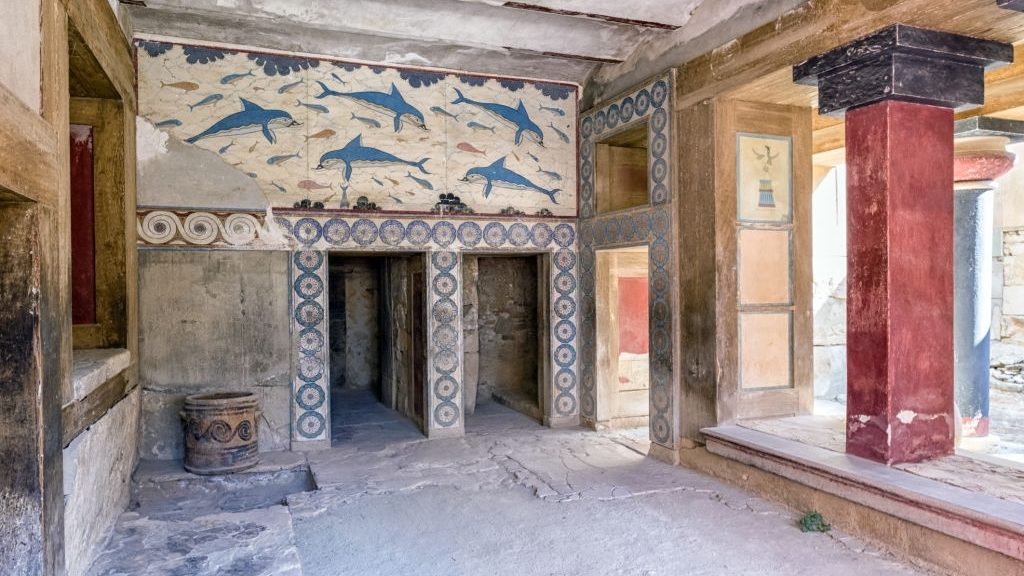
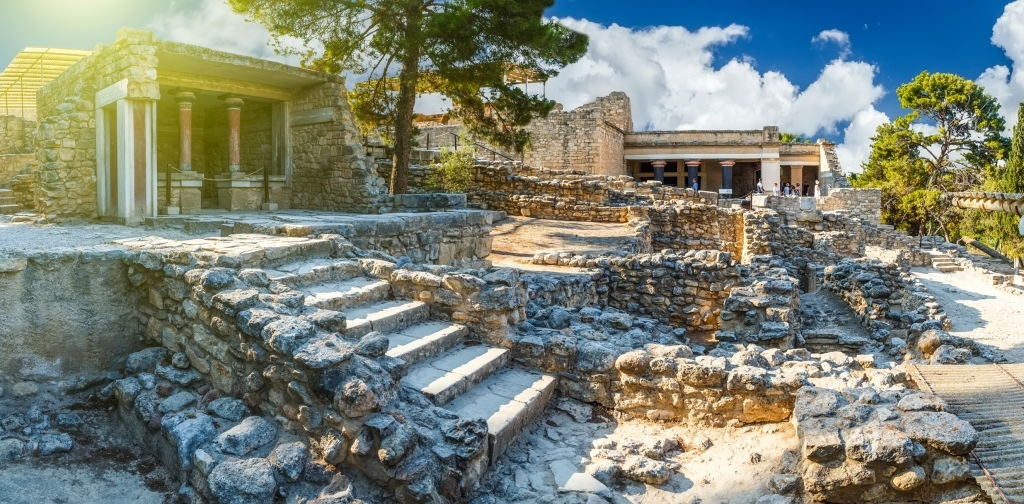
Many of the best-known Greek myths are set in the island of Crete. At its peak, the Minoan civilization (2000 – 1450 BC), and together, the island of Crete, was the dominant force in the East Mediterranean. It maintained control of the seas in the region, and so managed to diffuse and exert influence on various regions around the Mediterranean. It is believed that some of these myths and identities from the early Minoan religion, found their way later into…
Lees Meer Lees Meer
Na vele mislukte pogingen dwong de zegevierende opstand van de Kretenzers tussen 1896-1898 de grote mogendheden om druk uit te oefenen op de sultan om Kreta autonomie te verlenen. Dit leidde tot de oprichting van de semi-autonome Kretenzische staat met Prins George van Griekenland als Hoge Commissaris en Chania als hoofdstad.
De stad Heraklion, het laatste Venetiaanse bolwerk op Kreta, viel in 1669, na mogelijk het langste beleg in de geschiedenis. Bloedige gevechten en opstanden tegen de Ottomaanse overheersing leidden tot de autonomie van Kreta in 1898. Deze periode duurde tot 1913, toen het eiland werd verenigd met de rest van Griekenland.
During the first centuries of the AD era and onto the Middle Ages, Crete passed from one hand to another, due to its strategic position in the Mediterranean. As a result, the islanders were in a constant struggle for their freedom, wishing to get rid of the harsh and brutal conditions imposed upon them by the conquerors. The island passed successively into the hands of the Byzantines, the Arabs, the Byzantines again and the Venetians, but it continued to safeguard…
Lees Meer Lees Meer
In de loop der jaren migreerden Griekse stammen uit het achterland geleidelijk naar het eiland Kreta. De Minoïsche beschaving kwam rond 1300 voor Christus in de laatste fase van verval en het eiland Kreta werd geteisterd door natuurrampen en verwoestende aardbevingen.
De neolithische aanwezigheid op het eiland Kreta maakt plaats voor de wonderen van de Minoïsche beschaving. De naam werd aan dit tijdperk gegeven door moderne geleerden, als verwijzing naar de mythische koning Minos, heerser van het koninkrijk en het paleis van Knossos.

 NL
NL  EN
EN  DE
DE  FR
FR  IT
IT  PL
PL