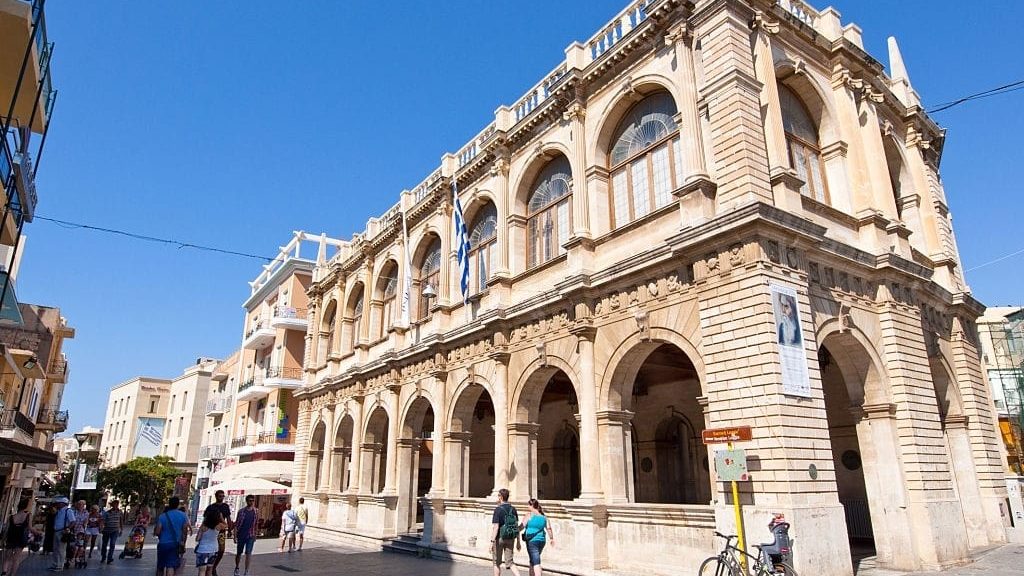
Venetian Loggia – Heraklion Town Hall
Il Loggia (from the Italian word for “Loggia“) is one of the most important buildings of the Venetian period in Creta. It was a kind of gentleman’s club, where the rich nobles and lords gathered. The building was built after 1541 probably with designs by Michel Sammicheliin Stile palladiano.
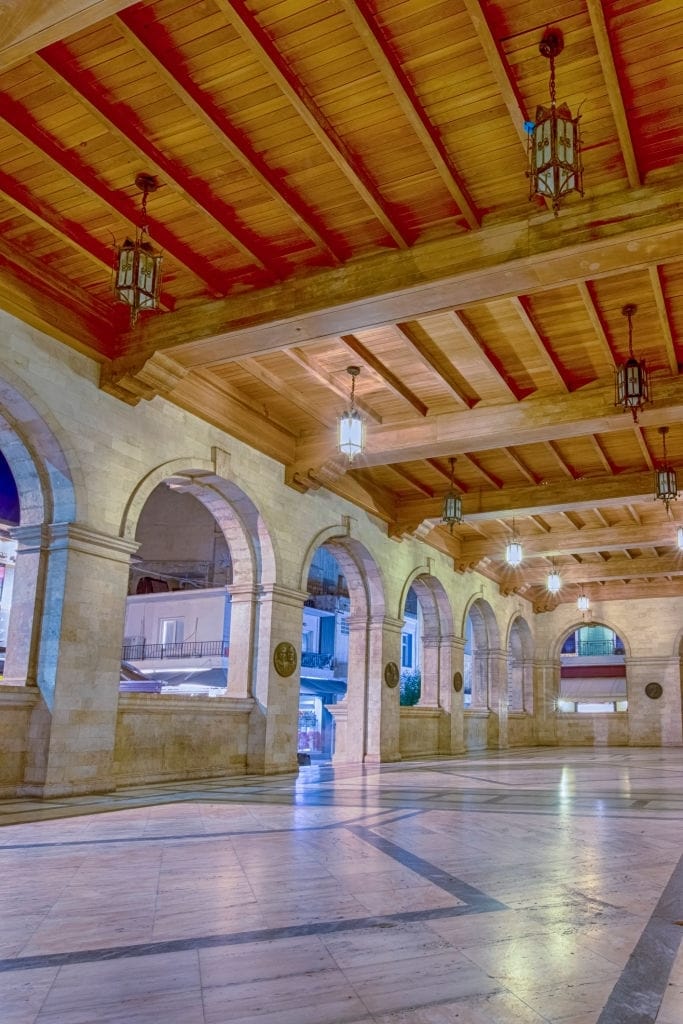
Fu poi ricostruito nella sua forma attuale dopo il 1628 da Francisco Morosini. Altri monumenti che portano Morosini’s firma sono i Fontana di Morosini (commonly referred to as the “Lions” and the construction of the aqueduct that made it possible for the city of Heraklion to have water. This was the final of four Logge, and very little information is available for the previous three or why the buildings didn’t survive. The Loggia era il centro di tutta la vita economica e sociale della città, dove i gentiluomini si riunivano per discutere di politica o per rilassarsi e socializzare. Durante il Medioevo, most Italian cities had established “Loggias”. We also find a Loggia in the city of Rethymnoche ospitava il Museo Archeologico per quasi 40 anni. Il design è spesso caratterizzato da un edificio quadrato con un design aperto ad arco che si affaccia sulla piazza.
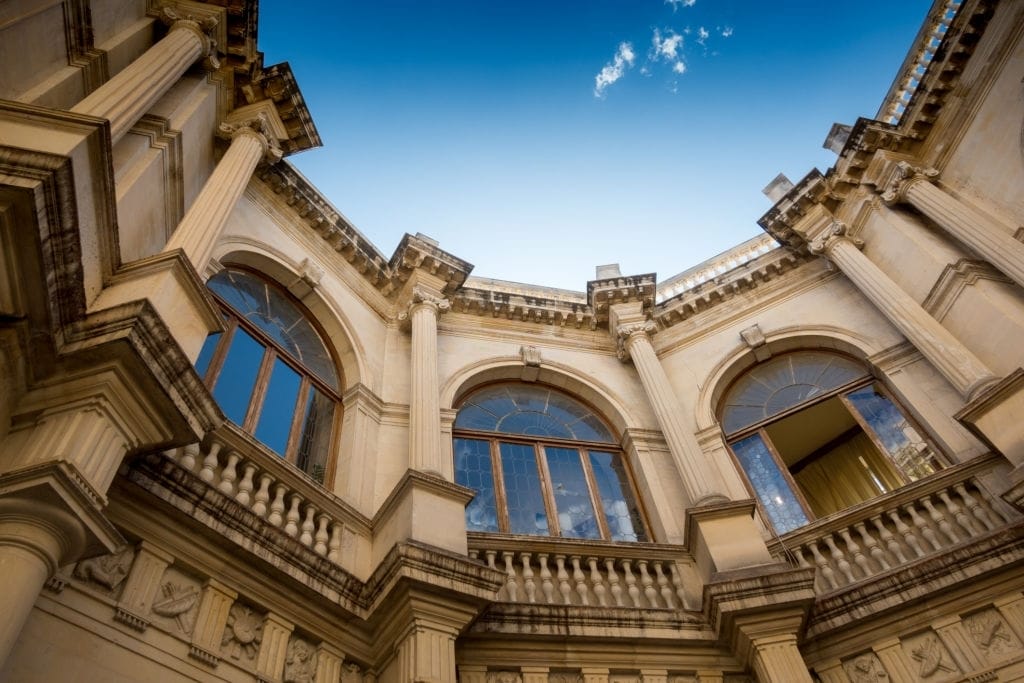
During the Turkish occupation, it was used as an armoury and suffered severe damage. It wasn’t after the Cretan State was established, in 1915, that renovations would start to take place, however, the onset of World War II in 1940 prevented any future work. In 1961, the final restoration of the monument began, which was completed shortly after 1979. In 1961, the final restoration of the monument began, which was completed shortly after 1979. Today the Loggia ospita il Municipio ed è stato premiato come il monumento meglio restaurato del Paese. È uno dei monumenti più importanti della città di Heraklion, insieme alle chiese di San Minas, San Titos, Santa Caterina e San Pietro, il Pareti veneziane, il Tomba di Nikos Kazantzakis and Morosini (or Lion’s) Fountain. Both the church of San Titos e St. Mark’s Basilica sono raggiungibili a piedi. In loco si tengono spesso eventi culturali e mostre.
 IT
IT  EN
EN  DE
DE  FR
FR  NL
NL  PL
PL