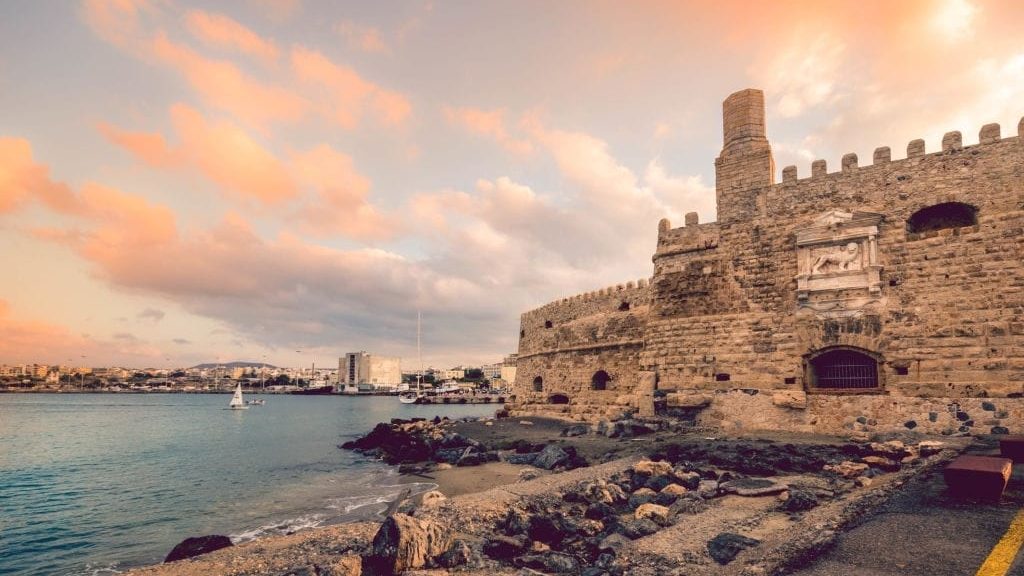
Venetian walls & gates in Heraklion
Già dagli anni del Primo Periodo Bizantino (330-840 d.C.), la città di Heraklion aveva delle fortificazioni che furono completate sia dalla Arabo conquistatori (840-961 d.C.) e dai Bizantini (961-1204 d.C.), nonché dai Veneziani dopo il 1211 d.C..
Tuttavia, la minaccia emergente dei Turchi costrinse Venezia a fortificare la capitale di Regno di Candia nel modo più moderno ed efficace dell'epoca. La forma delle fortificazioni che vediamo oggi è basata sui disegni dell'ingegnere capo M. Sanmicheli e furono costruiti nel periodo 1462-1560 circa.
La cinta muraria principale era lunga 3 km e aveva quattro porte e sette bastioni circondati da un ampio fossato, all'esterno del quale si trovavano bastioni oggi non conservati.
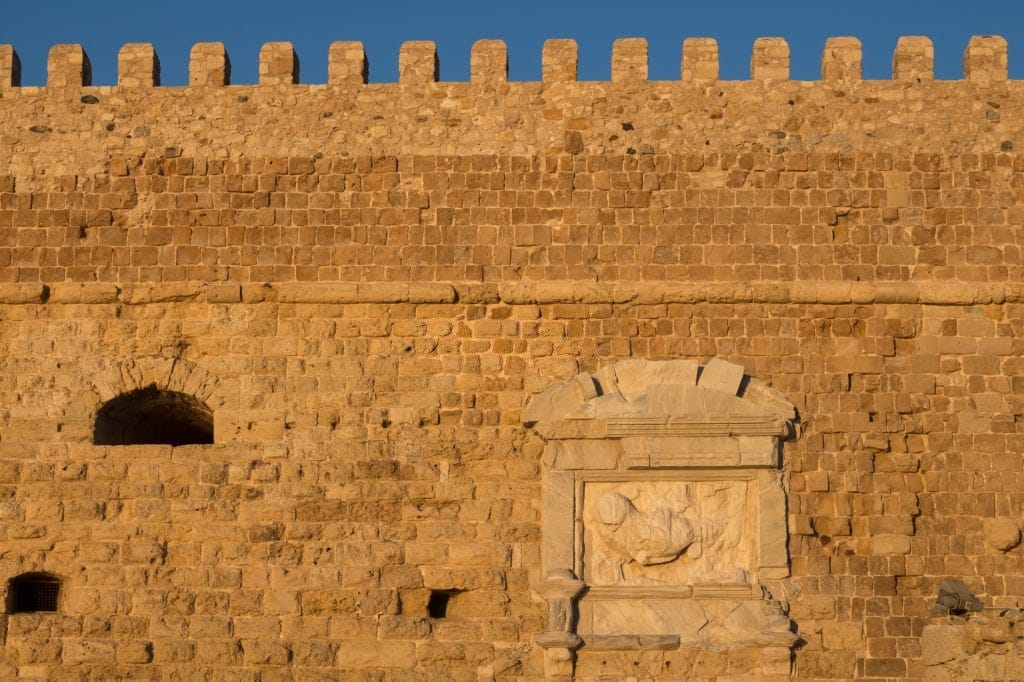
Le fortificazioni di Heraklion sono considerati, sia per le dimensioni che per l'estetica e la perfezione funzionale, tra i più importanti del Mediterraneo orientale.
Porte di fortificazione di Heraklion
The Venetian fortification of the city had four main gates which are located at the four points of the horizon. To the north, at the end of what is today 25th of August Street, there was the “Porta di Molos” that led to the port. To the west, there was the “Porta del Pantocratore“, next to which there is today the new impressive Canioporta.
A est del luogo dove oggi si trova la piazza centrale della città, Piazza Eleftherias, was the “Porta di Agios Georgios“. To the south was the “Porta di Gesù“. In addition to these main gates, three more gates facilitated the communication of the city with the sea. The one to the west was the “Porta di Sant'Andrea” which took its name from the homonymous bastion; this was the weakest point of the defense of the walls and from where the Turks entered the city in 1669.
The second gate to the east was called “Porta della spiaggia” because it led to the beach located east of the city. The third in the north is the “Cancello in pelle“, located west of the Museo storico di Heraklion che vale la pena visitare per farsi un'idea più precisa della storia cretese.
 IT
IT  EN
EN  DE
DE  FR
FR  NL
NL  PL
PL