Insediamento minoico a Karfi
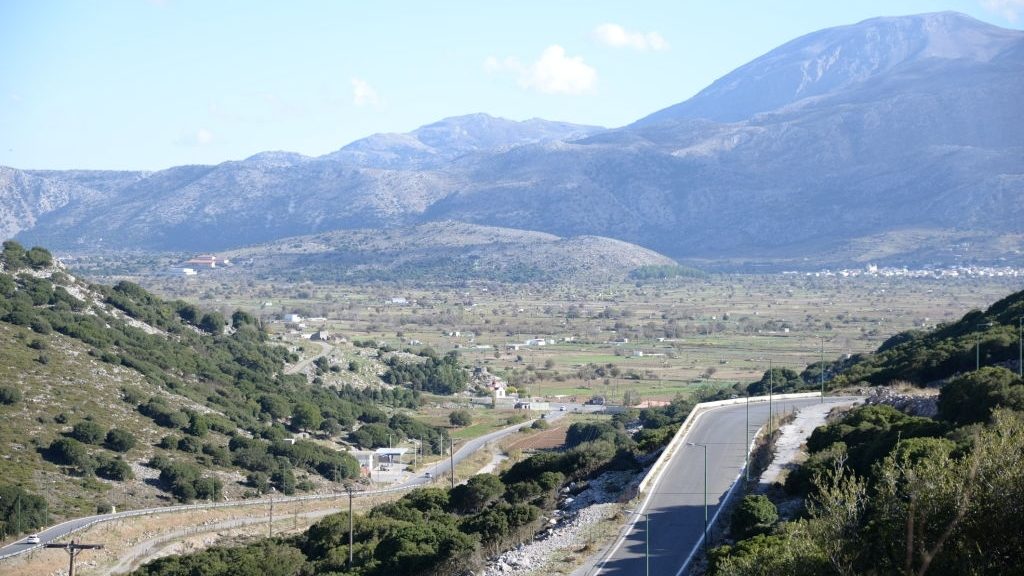
Karfi è un antico insediamento minoico particolarmente importante, situato sul lato orientale della sella di Ambelos (Seli). L'insediamento è stato costruito sul lato orientale del picco di Karfi e copriva l'intera area pianeggiante tra le cime di Mikri Koprana e Megali Koprana. Secondo gli archeologi, aveva una popolazione di circa 3.500 persone.
Il sito archeologico si trova a 50 km da Heraklion e 44 km da Agios Nikolaos a est. Il nome Karfi is modern, given to the location due to the spiky rock formations at the top of the summit (karfi = nail in Greek). The ancient name of the site is not known. Karfi is also part of the E4 Sentiero europeo di lunga percorrenza. È possibile raggiungerlo a piedi dal villaggio di Tzermiado seguendo il percorso attraverso il altopiano di Nissimos.
Si ritiene che l'insediamento sia stato fondato dalle popolazioni minoiche che dovettero fuggire nelle zone montuose, perché perseguitate dagli Dorico tribù che invasero l'isola. Fu fondato intorno al 1100 a.C., anche se nello stesso luogo esisteva già un santuario di picco. L'importanza archeologica del sito è stata notata inizialmente da Arthur Evansche è famoso soprattutto per la sua scoperta della Cnosso. Tuttavia, l'insediamento di Karfi è stato scoperto dall'archeologo inglese John Pendlebury. One of the most remarkable finds from the site is a goddess figurine. The arms are raised in praying or a blessing position, and she has a tubular torso, fixed legs and a bird on top of her head. No other important finds were found, probably due to the fact that the settlement was not destroyed suddenly, but gradually abandoned. As a result, most residents most likely took their belongings away with them. Τhe paved alleys of the settlement, which bring to mind the present-day architecture that can be seen in the villages of Eastern Crete, are quite interesting. The ancient settlement was supplied by the nearby Vitsilovrisi spring, also known as “the spring of the vultures”; it must have supplied a larger quantity of water back then than it does today.
 IT
IT  EN
EN  DE
DE  FR
FR  NL
NL  PL
PL