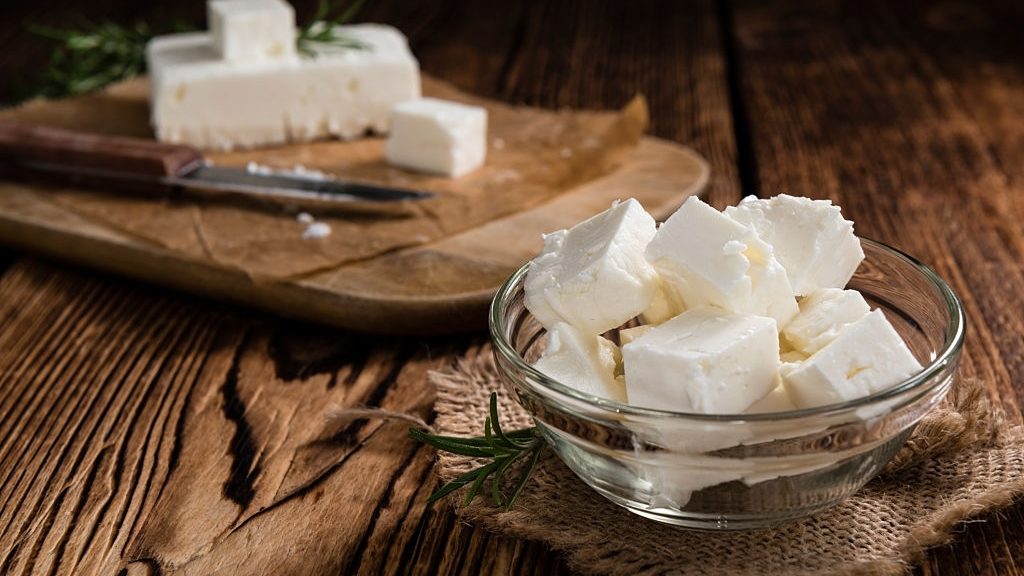
Kretischer Käse
Das Inhaltsverzeichnis
Cheese is consumed in Crete at any hour of the day – from morning to midnight – as an accompaniment or as the main ingredient, as an appetizer or for dessert. At a formal gathering or the family table, no Cretan meal is complete without cheese. Cretans will take their watermelon with feta, their honeydew with graviera und verbrauchen Mizithra mit Honig!
The value of cheese as a food item in ancient Greece was such that they called it a “Geschenk der Götter”. The first mention of milk from a wild goat or sheep being used as food comes from Griechische Mythologie. Zeus wurde als Baby von seiner Mutter mitgenommen Rhea zu einer Höhle am Berg Dikte in Crete – for fear of his murderous father, Kronos. Dort wurde er von einer Ziege aufgezogen (Amalthea) auf eine Diät mit Milchprodukten.
Livestock rearing on Crete has scarcely changed since then. It relies on the smaller beasts – goat and sheep, not cows, they are free-range or stabled (at the mandra) and their foodstuffs are almost entirely wild herbs and shrubs. The traditional cheese is not only viewed as something to eat but also as a substance that bears witness in its flavor to the plants, the savory preferences and the lifestyle prevailing at its point of origin.
Anthotiros
Anthotiros wird aus einer Mischung von Molke und frischer Schafs- oder Ziegenmilch hergestellt; sie wird langsam zu einer kohäsiven Masse mit einem hohen Flüssigkeitsgehalt von etwa 70% und ist nur leicht salzig; beim Trocknen (mit der Zeit und der Zugabe von Salz) wird sie noch härter. In getrocknetem Zustand hat sie einen Fettgehalt von mindestens 65%. Wenn es reif ist, sieht es äußerlich aus, als wäre es mit Asche bestreut worden. Das Wort für Asche (athos) kann zu seinem Namen beitragen. Ein anderer möglicher Ursprung des Namens könnte sich ableiten von anthos meaning “blossom”. It is most suitable grated onto a pasta dish, like spaghetti.
Galomizithra
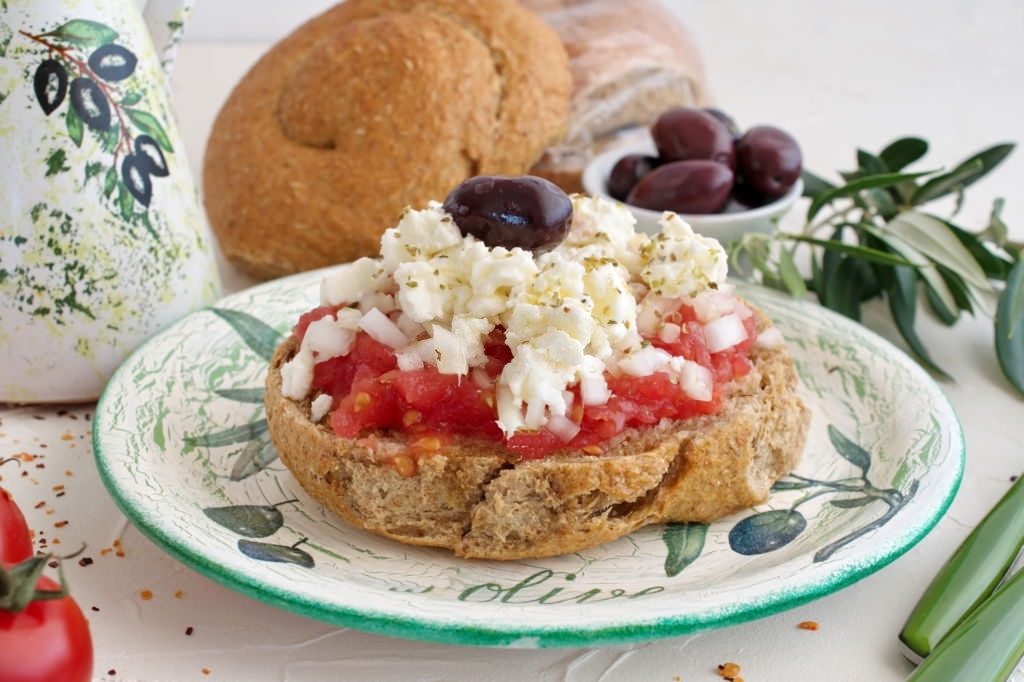
Galomizithra ist eine sehr einfache Form des Käses; die Milch wird mit einem natürlichen Stoff versetzt, der sie gerinnen lässt. Er wird hauptsächlich für den Hausgebrauch hergestellt, da er für den Transport zum Markt weniger geeignet ist. Galomizithra hat die gleiche Konsistenz und den gleichen Geschmack wie der lokale Mizithra aus Chania, der kretische Sauerkäse (xinomizithra): very tasty, with a gentle sourness to it – ideal for a dakos!
Graviera
Graviera is often made from goats’ milk, yet the best quality is from sheep’s milk alone. It is rich, full of butter and milk proteins: 38% moisture, 38.4% fat and 1.5% salt. With a strong taste and slightly on the salty side, it usually resembles cheddar – to British tastes. A wheel of graviera kann zwischen 5 und 25 Kilo wiegen. Er kann pur, mit Obst oder Brot, gekocht in Pasteten und anderen Gerichten sowie als Obst und Gemüse verzehrt werden. saganaki (paniert und gebraten).
Pichtogalo von Chania
Ein einfacher, alltäglicher Käse aus dem Chania region: it resembles yogurt in texture and has a slightly sharp taste. It can be made from sheep’s milk or a mix of sheep and goat. When it is fresh, it has a moisture content of 65%, when dry its fat levels are 50%, protein 16-20% and salt 1%. It is best eaten by itself or cooked in pies (bougatsa a la Chania).
Kefalotiri
A solid and compact cheese, of a darker yellow colour, produced in many parts of Greece from sheep’s milk or a mix of sheep and goat. Its moisture is low at 38%, with only 40% fat and plenty of salt. The flavour is salty, strong – even piquant, and somewhat fatty. Perfect for grating onto pasta dishes.
Malaka/Soft von Chania
This is a curd, the first step in making a graviera type cheese. Malleable, well-mixed – and excellent for pies. Especially the Chania-Torte – with its filling of cheeses, lamb-meat and spearmint.
Mizithra
Ein griechischer Käse, der in vielen Gegenden des Landes aus der Molke eines anderen Käses hergestellt wird. Die Molke wird mit frischer Milch versetzt und das Ganze dann in einem Topf erwärmt, wodurch ein weicher und frischer Käse mit neutraler Note entsteht. Frisch hat er einen hohen Fettgehalt und sollte daher in Maßen verzehrt werden, wenn man eine Diät macht. Er enthält auch viel Feuchtigkeit, bis zu 70%; selbst trocken enthält er 50% Fett. Beim Backen eignet er sich hervorragend als Füllung für kleine süße Torten. Er passt hervorragend zu frischem Obst und eignet sich sowohl als Vorspeise als auch als Dessert mit einem Klecks Honig.
Xigala aus Sitia
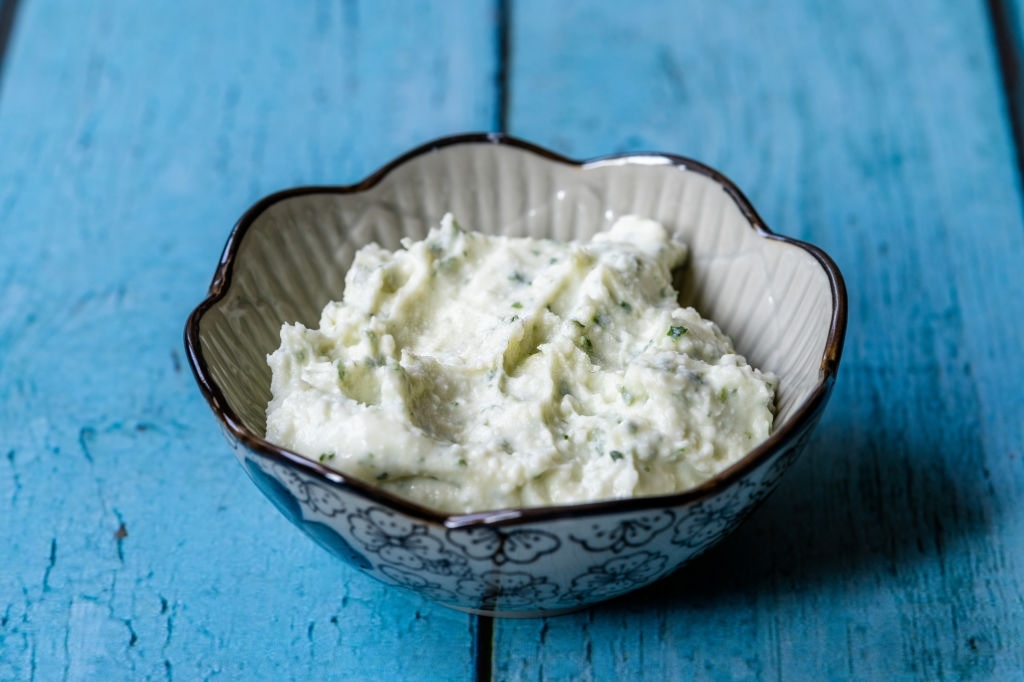
Ein Käse mit cremiger Textur, der nur in Ost-Kreta. Sein Geschmack ähnelt dem von xinomizithra und Pichtogalo-Tschanionreich, leicht scharf und frisch.
Xinomizithra
Xinomizithra is an exclusively Cretan product. To make, whey is mixed with fresh milk (a mix of sheep and goat) and left for 24 hours in a naturally warm environment to sour or ‘turn’. It has 50% moisture, only 23% fat, 15% protein and 2% salt. Most suitable for pies – and dieting.
Staka
Staka is somewhere between cheese and yogurt – a rather different dairy product. When freshly drawn, the top of the milk is collected and lightly salted. When enough of this layer has been collected, it is warmed over low heat for several hours – a little flour is also added which separates out the protein from the fat content. The fat is skimmed off and kept separate: this is the famed stakovoutiro und kann genau wie Butter behandelt werden. Die dicke Masse an Eiweiß, die übrig bleibt, ist die eigentliche staka. Sie können es zum Kochen von Eiern oder für Spaghetti verwenden, Kretischer Pilaw – or in pies.
Tirozouli
Ein traditioneller Käse aus Schafs- und Ziegenmilch, den man heute nur noch selten auf dem Markt findet. Wenn Sie frischen Käse kaufen möchten tirozouliist es am besten, sich mit einem Schäfer anzufreunden. Tirozouli is boiled, coagulated by adding an acid/vinegar – or the juice of figs instead of rennet. It is lightly salted, or not at all, with a malleable consistency.
 DE
DE  EN
EN  FR
FR  IT
IT  NL
NL  PL
PL