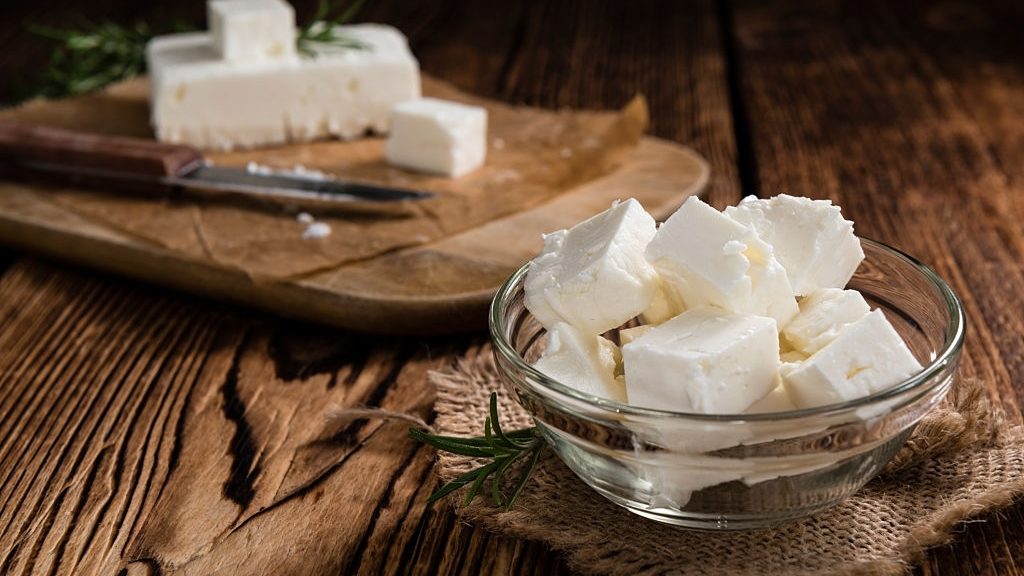
Kretenzische kaas
Inhoudsopgave
Cheese is consumed in Crete at any hour of the day – from morning to midnight – as an accompaniment or as the main ingredient, as an appetizer or for dessert. At a formal gathering or the family table, no Cretan meal is complete without cheese. Cretans will take their watermelon with feta, their honeydew with graviera en consumeren mizithra met honing!
The value of cheese as a food item in ancient Greece was such that they called it a “geschenk van de goden”. The first mention of milk from a wild goat or sheep being used as food comes from Griekse mythologie. Zeus werd als baby door zijn moeder meegenomen Rhea naar een grot op De berg Dikte in Crete – for fear of his murderous father, Kronos. Daar werd hij grootgebracht door een geit (Amalthea) op een dieet van zuivelproducten.
Livestock rearing on Crete has scarcely changed since then. It relies on the smaller beasts – goat and sheep, not cows, they are free-range or stabled (at the mandra) and their foodstuffs are almost entirely wild herbs and shrubs. The traditional cheese is not only viewed as something to eat but also as a substance that bears witness in its flavor to the plants, the savory preferences and the lifestyle prevailing at its point of origin.
Anthotiros
Anthotiros wordt gemaakt van een mengsel van wei en verse schapen- of geitenmelk; het wordt langzaam een samenhangende massa met een hoog vloeistofgehalte van ongeveer 70% en is slechts licht zout; naarmate het droogt (met de tijd en de toevoeging van zout) wordt het nog harder. Als hij volledig droog is, heeft hij een vetgehalte van minstens 65%. Als het rijp is, ziet de buitenkant eruit alsof er as op is gegooid. Het woord voor as (athos) kan bijdragen aan de naam. Een andere mogelijke oorsprong van de naam kan afkomstig zijn van anthos meaning “blossom”. It is most suitable grated onto a pasta dish, like spaghetti.
Galomizithra
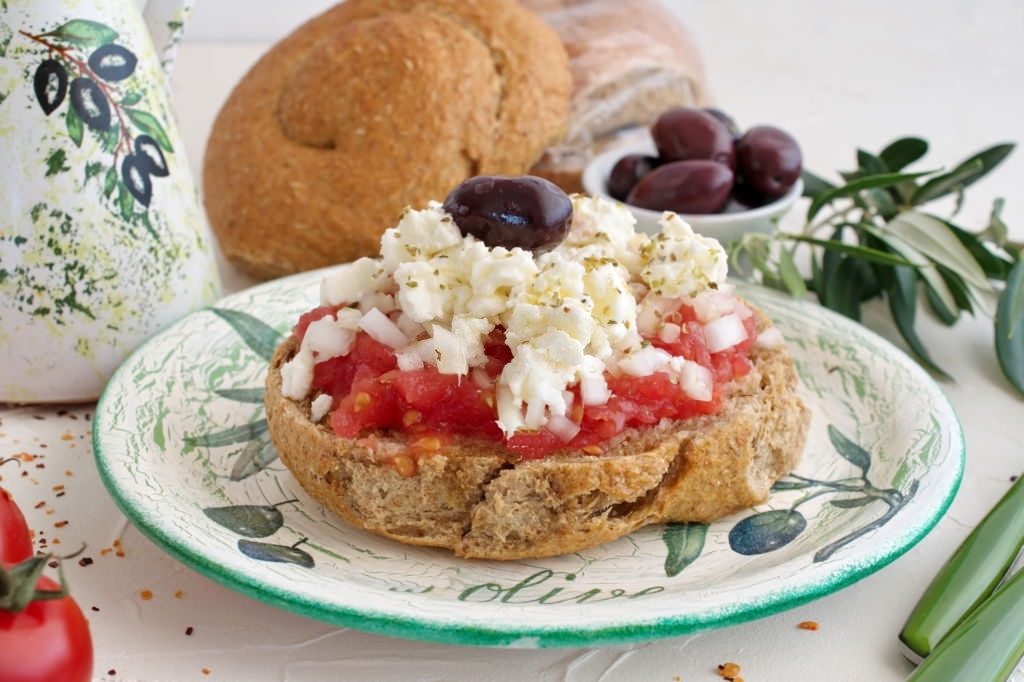
Galomizithra is een heel eenvoudige vorm van kaas; aan de melk wordt een natuurlijk middel toegevoegd dat de melk doet stremmen. De kaas wordt voornamelijk voor huishoudelijk gebruik gemaakt en is minder geschikt voor transport naar de markt. Galomizithra heeft dezelfde textuur en smaak als de lokale mizithra uit Chania, of Kretenzische zure kaas (xinomizithra): very tasty, with a gentle sourness to it – ideal for a dakos!
Graviera
Graviera is often made from goats’ milk, yet the best quality is from sheep’s milk alone. It is rich, full of butter and milk proteins: 38% moisture, 38.4% fat and 1.5% salt. With a strong taste and slightly on the salty side, it usually resembles cheddar – to British tastes. A wheel of graviera kan tussen de 5 en 25 kilo wegen. Het kan gewoon gegeten worden, met fruit of brood, gekookt in taarten en andere gerechten, en als saganaki (gepaneerd en gefrituurd).
Pichtogalo van Chania
Een eenvoudige, alledaagse kaas uit de Chania region: it resembles yogurt in texture and has a slightly sharp taste. It can be made from sheep’s milk or a mix of sheep and goat. When it is fresh, it has a moisture content of 65%, when dry its fat levels are 50%, protein 16-20% and salt 1%. It is best eaten by itself or cooked in pies (bougatsa a la Chania).
Kefalotiri
A solid and compact cheese, of a darker yellow colour, produced in many parts of Greece from sheep’s milk or a mix of sheep and goat. Its moisture is low at 38%, with only 40% fat and plenty of salt. The flavour is salty, strong – even piquant, and somewhat fatty. Perfect for grating onto pasta dishes.
Malaka/Zacht van Chania
This is a curd, the first step in making a graviera type cheese. Malleable, well-mixed – and excellent for pies. Especially the Chania tarte – with its filling of cheeses, lamb-meat and spearmint.
Mizithra
Een Griekse kaas die in veel gebieden van het land te vinden is en die wordt gemaakt van de wei van elke andere kaas. Verse melk wordt toegevoegd aan de wei en het hele mengsel wordt vervolgens opnieuw verhit in een pot, waardoor een zachte en frisse kaas met een neutrale noot ontstaat. Verse kaas bevat veel vet en moet dus met mate worden gegeten als je op dieet bent. Hij zit ook vol vocht, tot 70%; zelfs droog bevat hij 50% vet. Bij het bakken is het een uitstekende vulling voor kleine zoete taarten. Het is een uitstekende begeleider van vers fruit en werkt even goed als aperitiefhapje of als dessert met een drupje honing.
Xigala van Sitia
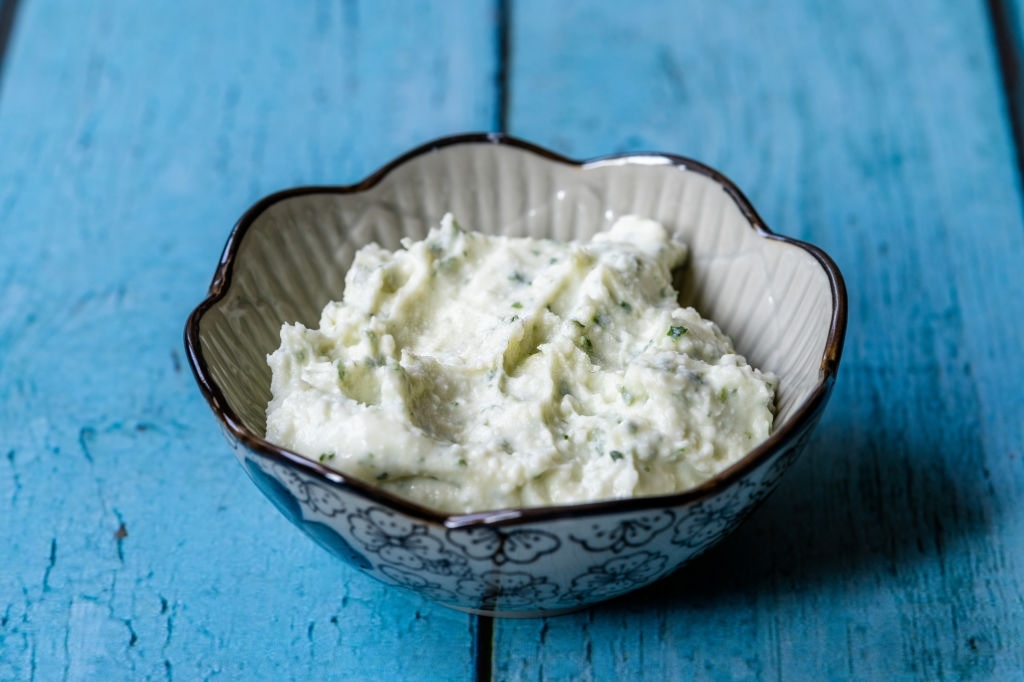
Een kaas met een romige textuur die alleen te vinden is in Oost-Kreta. De smaak lijkt op die van xinomizithra en Pichtogalo ChanionRijk, licht scherp en fris.
Xinomizithra
Xinomizithra is an exclusively Cretan product. To make, whey is mixed with fresh milk (a mix of sheep and goat) and left for 24 hours in a naturally warm environment to sour or ‘turn’. It has 50% moisture, only 23% fat, 15% protein and 2% salt. Most suitable for pies – and dieting.
Staka
Staka is somewhere between cheese and yogurt – a rather different dairy product. When freshly drawn, the top of the milk is collected and lightly salted. When enough of this layer has been collected, it is warmed over low heat for several hours – a little flour is also added which separates out the protein from the fat content. The fat is skimmed off and kept separate: this is the famed stakovoutiro en kan net als boter worden behandeld. De dikke eiwitmassa die overblijft is de juiste staka. Je kunt het gebruiken om eieren te koken, op spaghetti te doen, Kretenzische pilaf – or in pies.
Tirozouli
Een traditionele kaas van schapen- en geitenmelk die tegenwoordig zelden op de markt te vinden is. Als je op zoek bent naar verse tirozouliHet is het beste om vrienden te worden met een herder. Tirozouli is boiled, coagulated by adding an acid/vinegar – or the juice of figs instead of rennet. It is lightly salted, or not at all, with a malleable consistency.
 NL
NL  EN
EN  DE
DE  FR
FR  IT
IT  PL
PL