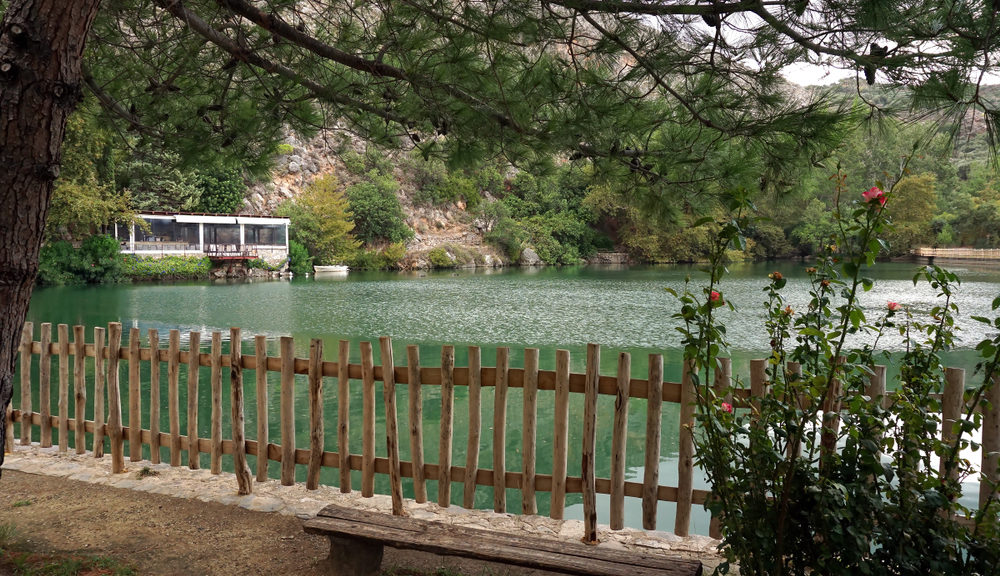
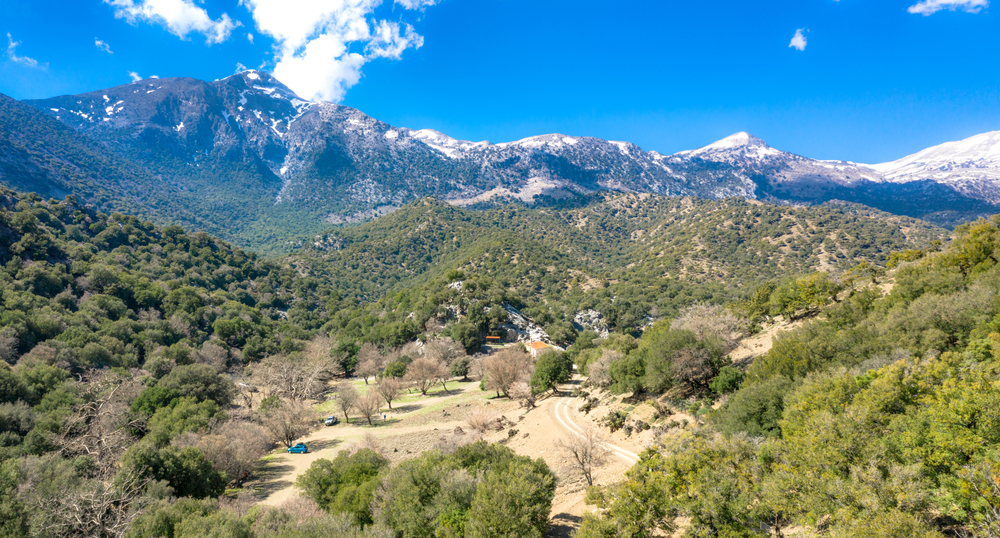
Lake Votomos is a small lake, close to the village of Zaros on the southern side of the Rouvas forest. This small village on the foothills of Mount Psiloritis in central Crete is close to a lot of archaeological sites and monasteries but is mostly visited by those seeking to explore the natural beauty of the area. The E4 European long-distance path travels through the village; the north route takes you through the forest of Zaros towards the village of…
Weiterlesen Weiterlesen
Der Selakano-Wald ist ein Gebiet von wilder Schönheit und eines der wichtigsten Ökosysteme der Insel, das zum Natura-2000-Netz gehört. Der Kiefernwald in einer Berglandschaft beginnt etwa 35 km nordwestlich von Ierapetra und zieht sich an den Hängen unterhalb des Gipfels von Afendi Christos im Dicte- (oder Dikti-) Massiv hinauf.
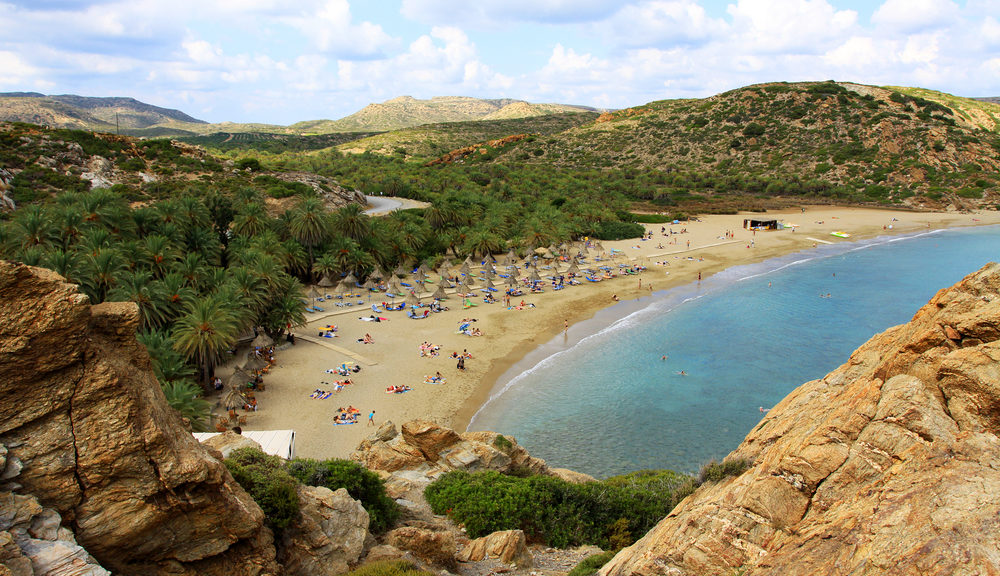
Vai palm forest lies in a beautiful valley, by a sandy beach, just north of ancient Itanos: 28 km from Sitia, 8 from Palaikastro and 6 from Toplou. Covering 200 stremmata (50 acres), it is made up of the native Theophrastus palms – the largest palm grove not only in Greece but in all of Europe.
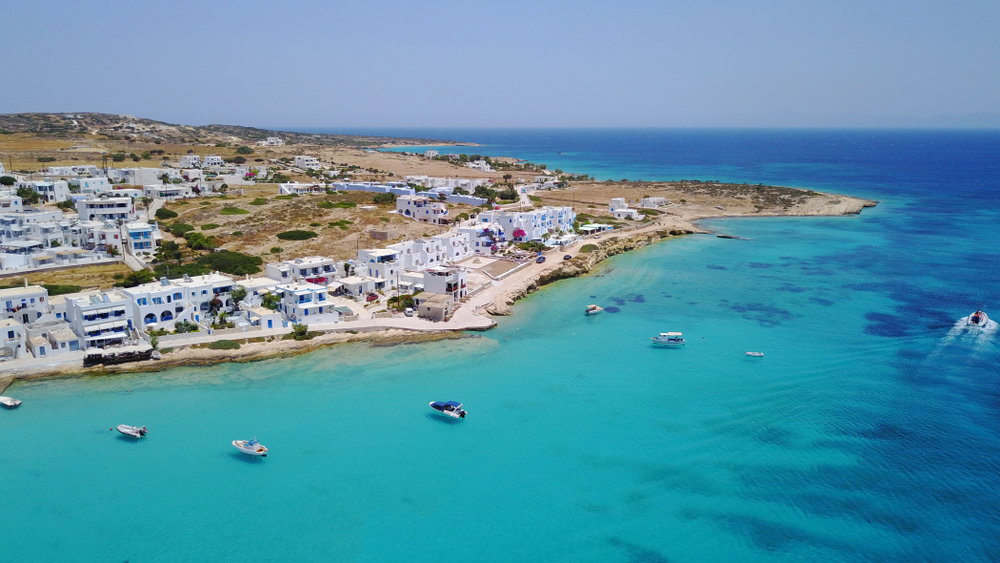
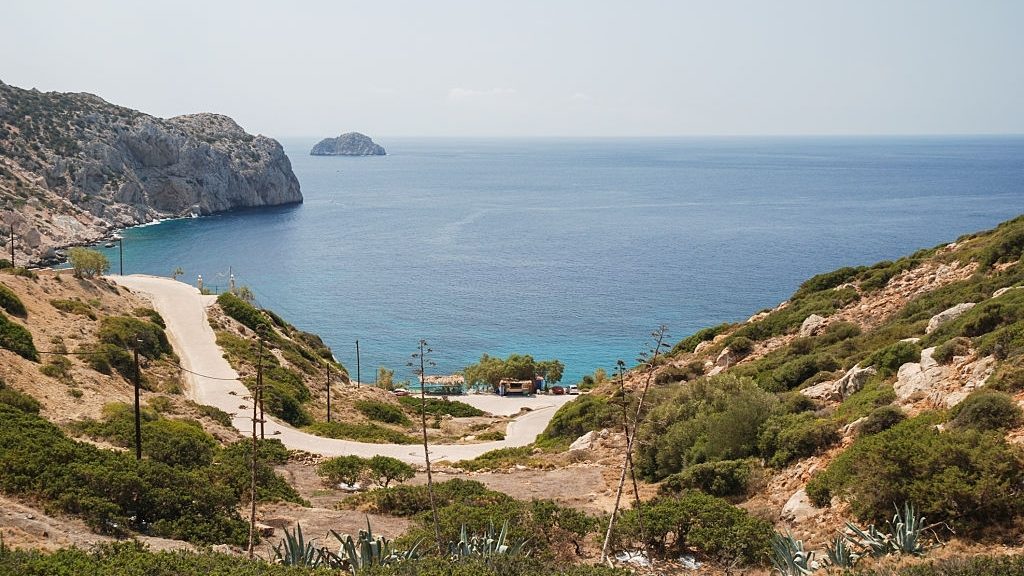
Koufonisi is a tiny Greek island, located on the southwestern coast of Crete in the Libyan Sea. While it is only 5.25 square kilometres in size, the wealth of archaeological finds have termed Koufonisi, “little Delos”. Together with the main island, the region includes smaller islets – Stronguli, Makrouli and Marmara to the north, as well as Trachilos to the south. The sea comprises 60% of the designated territory.
The forest of Trigiodo – Vroulidia is an important ecosystem centred on an oak forest. It occupies the inner valley of a mountain massif near Anogia, one of the most well known touristy villages in Crete island, which borders the Zominthos region. Anogia rests on the slopes of Mount Psiloritis at an altitude of 700 m and is the birthplace of the famous Greek singer Nikos Xylouris.
Der Wald von Rouvas ist ein lebenswichtiges Ökosystem, das in erster Linie auf einem Eichenwald basiert und einer der wichtigsten und wertvollsten Eichenwälder ist, die es auf der Insel Kreta noch gibt. Er erstreckt sich an den Hängen des Psiloritis im Landesinneren und wird von den Gipfeln Ambelakia und Samari im Süden, Chalazokephala im Westen, Skinaka und Koudouni im Norden und Gyristi im Osten begrenzt. Der Wald umfasst etwa 30.000 Stremmata (7400 Hektar).
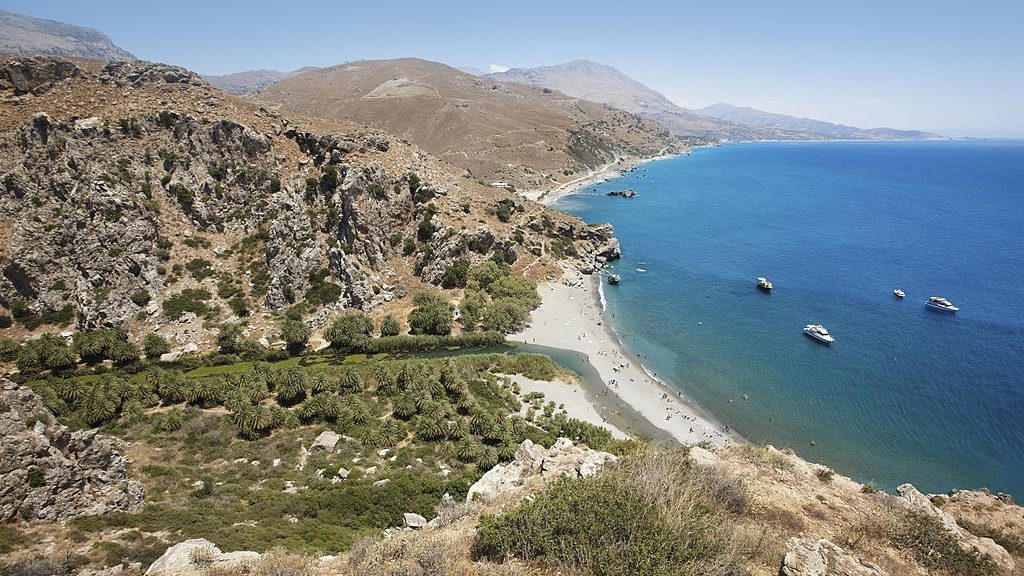
Das Gebiet von Preveli an der Südküste der Insel ist zweifelsohne eines der eindrucksvollsten auf Kreta. Es verbindet die beeindruckende Geomorphologie der Kourtaliotiko-Schlucht mit einem bedeutenden Ökosystem und einem Strand von seltener Schönheit; in der Nähe befindet sich auch das Kloster von Preveli mit einem kleinen Museum, das einen Besuch wert ist, um die Geschichte der Gegend kennenzulernen. Der Name Preveli wird vor allem mit dem Palmenwald in Verbindung gebracht, der den Strand umgibt.
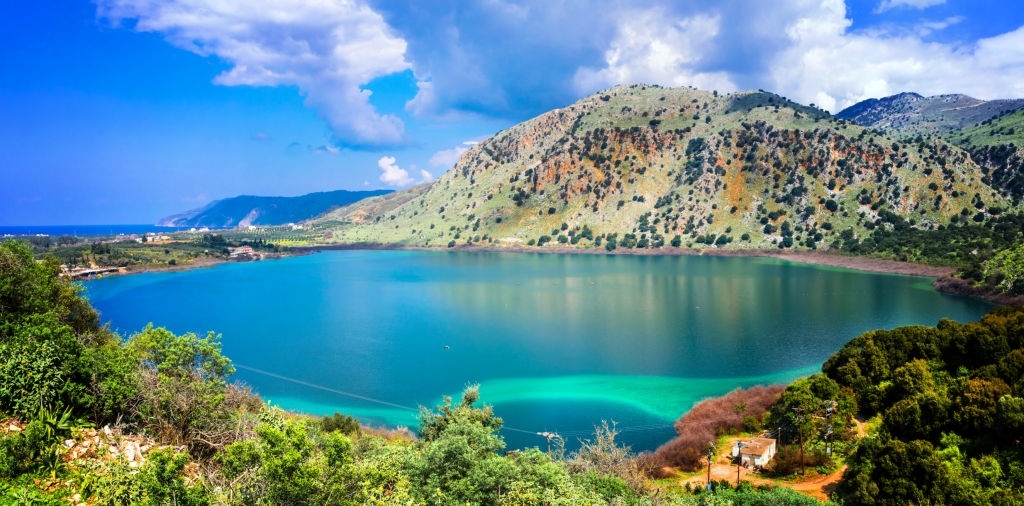
The only freshwater lake on the island of Crete, Kournas Lake, is located at the north edge of the White Mountains, barely 4 km from Georgioupolis, on the borders of Apokoronas. The name – Kournas – probably comes from the Arab word for lake/tub – or perhaps the word for a tap. In the past, it was called Korisia. Some believe there was a temple here to Athena Korisias. The lake creates a fascinating environment, which constantly changes with the…
Weiterlesen Weiterlesen
Der Gigilos-Gipfel in den Weißen Bergen in der Region Sfakia gilt als einer der bezauberndsten Berggipfel von Kreta. Er erhebt sich aus den Tiefen der Schlucht unterhalb von Xyloskalo, trotzig und karg, aschfahl in der Farbe, aber nicht im Geist, wie sein alter Name vermuten lässt.
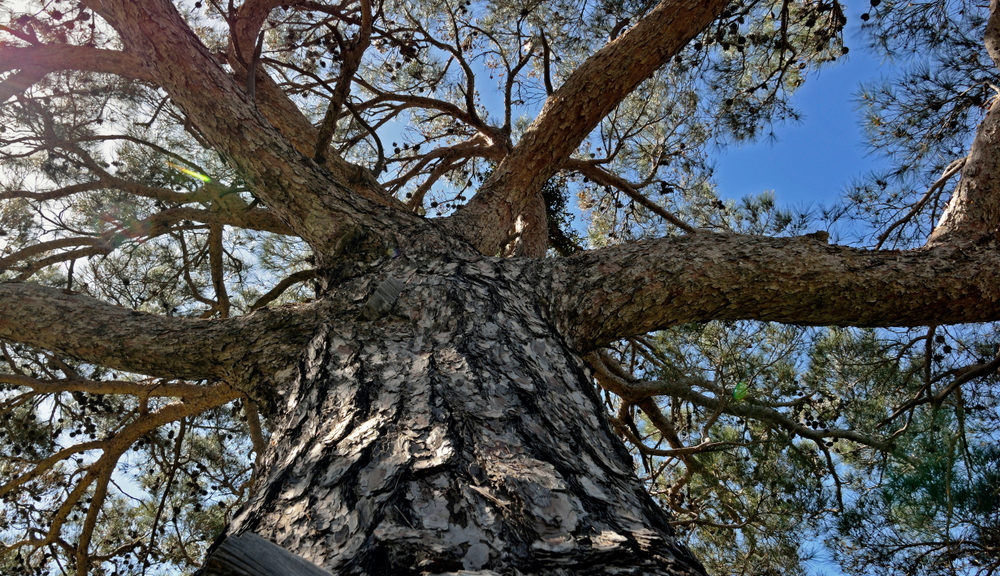
Einer der ausgedehntesten Wälder auf Kreta ist der Simi-Kiefernwald, in dem die kalabrische Kiefer (Pinus brutia) vorherrscht, aber auch große Bestände von Eichen, Zypressen und anderen Arten wie Ahorn, Steineiche und Stechpalme sind zahlreich vertreten.

 DE
DE  EN
EN  FR
FR  IT
IT  NL
NL  PL
PL