Architettura cretese
L'architettura del isola di Creta has been closely tied to the natural physical landscape – not just with respect to the materials employed but also the forms and types of the structures.
Tra le forme architettoniche tradizionali troviamo anche elementi della pratica minoica, che sono sopravvissuti al passare dei secoli e sono ancora oggi visibili.
Villaggi cretesi tradizionali
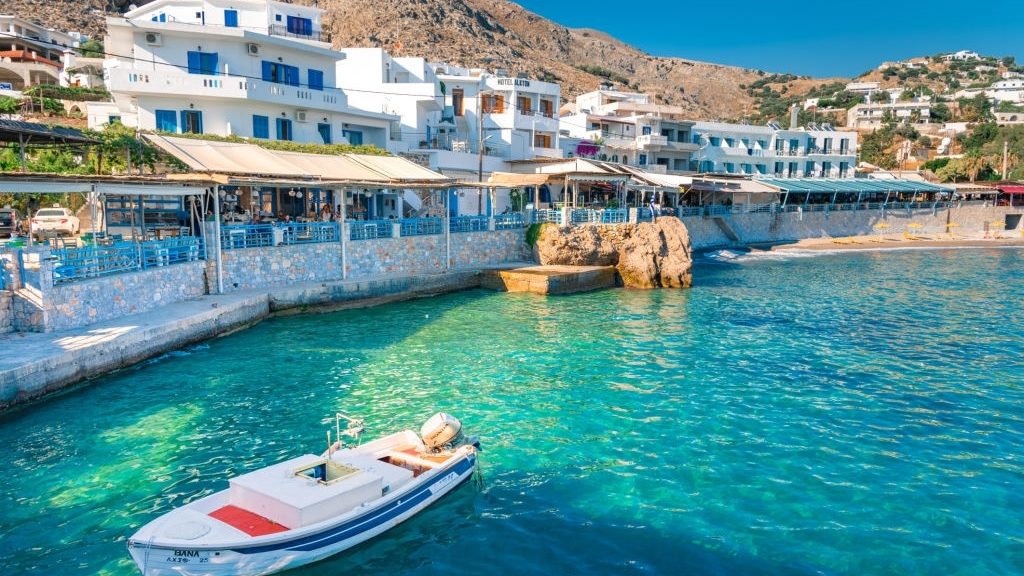
A typical feature in the landscape of Crete is its villages. In essence, their architecture has remained unchanged through the years. Here we see the use of local materials – stone, wood, and mud, especially in villages that were built on hills and mountainsides. The settlements are usually built like an amphitheater on the side or top of a small hill, clustered together tightly. One of the reasons for this is that it was a better defence strategy against enemy attacks. The settlements are characterized by their narrow streets and the fact that the houses are packed on top of each other which contributed to the communal living style as well. At the same time, other elements like stairs, pergolas, chimneys and so on, break up the uniformity in appearance – creating a notable whole. The most prominent point in a village is usually the church, while the square or market is also a center of social life – the ‘sell-everything’ shop, the kafenion e gli altri negozi commerciali si raggruppano intorno ad esso. Anche oggi i visitatori possono aspettarsi di trovare un kafeneion and “mini-mercato” in the center of every village facing the square.
Dopo LA SECONDA GUERRA MONDIALEL'aspetto di molti villaggi cominciò a cambiare. In molti casi, dovevano essere ricostruiti dopo le catastrofi che li avevano colpiti durante l'occupazione, mentre allo stesso tempo cambiavano anche le esigenze della gente e l'essenza della vita del villaggio. Così, la normale casa del villaggio cretese ha acquisito colore, è più orientata verso l'esterno e si è allontanata dalla norma tradizionale. La maggior parte dei villaggi ha iniziato a riadottare tutti quegli elementi che erano andati perduti nell'epoca della servitù della gleba. Sebbene i villaggi più importanti e più ricchi siano cambiati, perdendo così il loro carattere tradizionale, oggi rimangono molti villaggi il cui tessuto di base è rimasto invariato. In questi quartieri di case tradizionali con cortili esterni e fiori in vaso, strade lastricate di pietra, archi e muri imbiancati a calce, troviamo un assaggio dell'essenza di Creta nei secoli precedenti.
 IT
IT  EN
EN  DE
DE  FR
FR  NL
NL  PL
PL