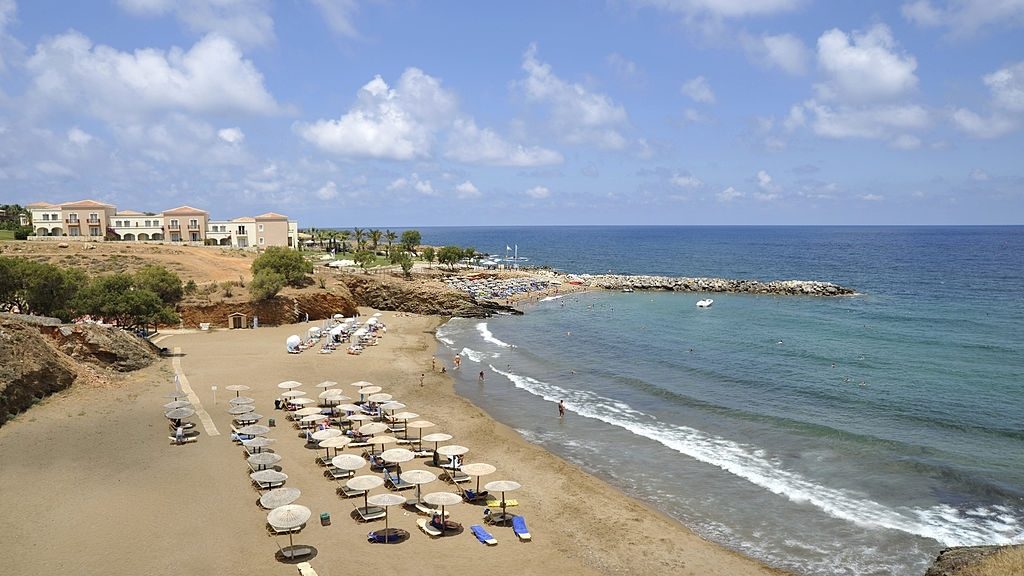
Spiaggia di Panormo
L'insediamento di Panormo is on the southern coast of Crete island. It is a popular tourist destination located 21 km from Rethymno e 10 km a ovest di Bali. Nonostante i numeri che riceve, Panormo retains quite a bit of its traditional character as many of the stone-built houses have been restored, and not simply replaced by modern apartment buildings. Above the small harbour, on a rocky outcrop, you can spot the remains of an old fort – the I genovesi occupano Creta shortly before the Venetians took over again – and a small stone-built church (Ascension). The village of Panormo negli ultimi anni ha visto un costante sviluppo e i visitatori possono scegliere tra diversi complessi alberghieri e opzioni di alloggio.
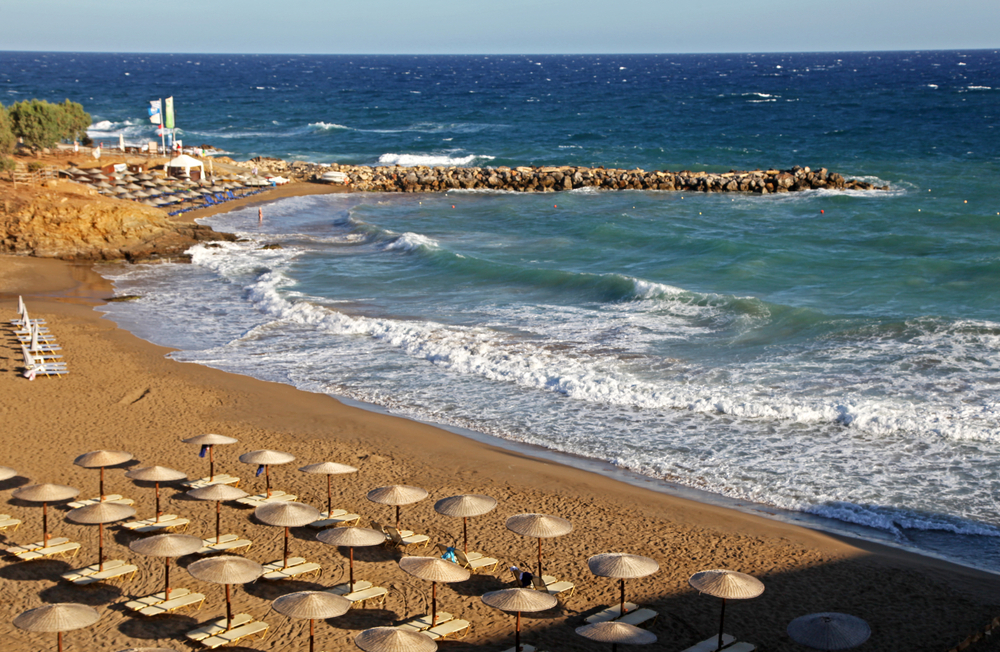
Il litorale, costituito da diverse piccole baie, offre molte possibilità di balneazione. Tutte le spiagge tendono ad affollarsi durante l'intensa stagione estiva; alcune sono di sabbia e altre di ciottoli. Le acque sono poco profonde e protette, il che rende Panormo an ideal spot for families with small children. The main beach is a natural harbour where the locals moor their boats. Both this and the adjacent strand are fully organized with umbrellas, sunbeds, showers, numerous water-sports activities and a lifeguard. In addition, there are other beaches, more or less organized, that attract fewer people – a fact that makes them perfect for those that prefer a relaxing experience. Moving east, a hiking trail will take you to the cape where the lighthouse of Panormo si erge. La vista è eccellente, ma il sentiero può essere impegnativo, quindi sono necessarie calzature adeguate. Proseguendo lungo la costa orientale, si incontrano le spiagge di Koukistres, Agios Nikolaos e Karavostasi prima di raggiungere il città popolare di Bali (10 km).
Nella zona si trovano anche Cantina Klados, where you can taste local Cretan varieties and learn more about the process of vine growing. Only 10 km south, don’t skip a visit to Grotta dei Melidoni, uno dei luoghi storicamente più importanti dell'isola. Si stima che l'area sia stata abitata per la prima volta intorno al 3000 a.C. e che sia stata anche un importante luogo di culto durante il periodo minoico.
 IT
IT  EN
EN  DE
DE  FR
FR  NL
NL  PL
PL