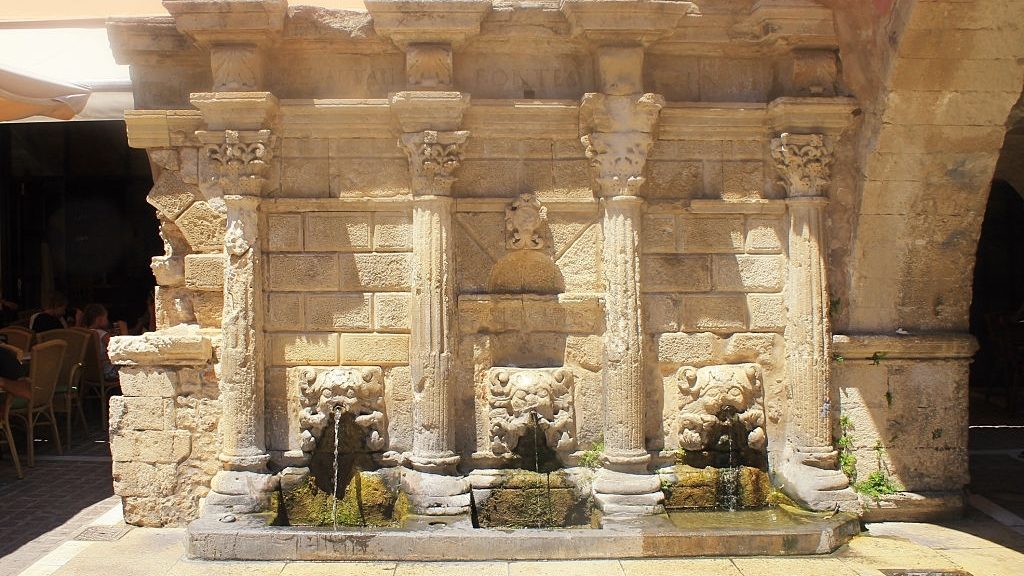
Rimondi Fountain – Rethymno
The Fontanna Rimondi jest jedną z najbardziej znanych atrakcji w mieście Rethymnow tym Brama Guoraw Wieża zegarowa (która niestety już nie istnieje) i Kara Musa Phasha meczet. Meczet miasta Krety zawsze miały problem z zaopatrzeniem w wodę, któremu Wenecjanie stawili czoła budując akwedukty i fontanny.
Dziś w mieście Rethymno zachowało się osiem fontann, z których tylko jedna przetrwała z czasów weneckich i jest to nic innego jak Fontanna Rimondi, or “Vrysakia” as the locals call it. According to a legend, drinking from the fountain will guarantee eternal youth.
Fontanna została zbudowana i nazwana na cześć Rektor (dowódca) Rethymno, A. Rimandi i znajdował się w samym sercu miasta, przy dzisiejszej ul. Plac Petichaki. It covered a significant part of the town’s water needs and was built in 1626. It consists of three troughs from where the water runs respectively into three taps in the shape of a lion’s head. Four ribbed columns ending in Corinthian capitals support a Latin inscription, while behind the fountain is the small tank that supplies water to the taps. Later, during the Turkish occupation, a hemispherical dome was added over the fountain, from which one pillar is still preserved. “Vrysakia” remains a typical, as well as well-photographed corner of the old town and a favourite meeting point of the people of Rethymno.
Walking around the Old Town of Rethymno is one of the best ways to get to know the area. The most important sights are arguably found around the “Stare Miasto”. You will discover its narrow alleyways, picturesque corners, architectural treasures, old mansions and distinct traces of the conquerors who passed through here. Very close to the fountain, we find the Marine Life Museum that displays a part of the massive collection that belongs to Muzeum Moschakio w Atenach jak również Muzeum Historyczne i Folklorystyczne w Rethymno. Muzeum mieści się w odrestaurowanej XVII-wiecznej weneckiej rezydencji, a jego zbiory pochodzą z darowizn i zakupów. Liczy ona ponad 5 000 eksponatów. Stałe obszary wystawowe rozciągają się na pięć sal i obejmują głównie tradycyjne rękodzieło i przedmioty sztuki ludowej.
 PL
PL  EN
EN  DE
DE  FR
FR  IT
IT  NL
NL